
Sustainability at terra
Sustainability is not an option - it is our responsibility!

Sustainable solutions for your project
Climate protection presents companies with the challenge of systematically reducing their environmental and energy impacts while remaining economically viable. With the European climate goal of significantly reducing greenhouse gas emissions by 2030 compared to 1990 levels, the demands on companies are also increasing.
We address these demands with a systematic approach: By implementing our ISO 14001 environmental management system, we’re creating a structured frame to identify our environmental aspects, assess relevant impacts, and continuously improve our environmental performance.
We also evaluate our solutions and business model from these perspectives. Our focus is on conserving resources, ensuring the efficient use of machines and equipment, and achieving reductions in relevant environmental and energy impacts. Where we can demonstrate concrete savings and improvements, we present them in a transparent and verifiable manner.
Our goal is not to make blanket promises about sustainability, but rather to implement concrete measures, make them measurable, and continuously refine them.
If you have any further questions, our entire team is happy to assist you at any time. Just reach out to us.
We’d be delighted to support you as your partner in the area of sustainability as well.
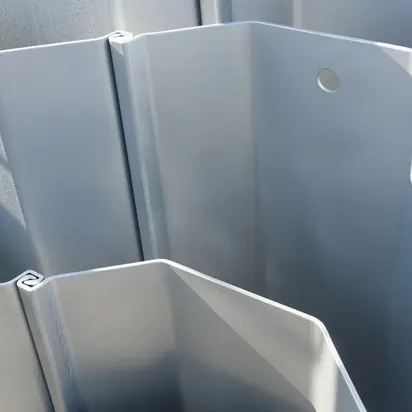
Sustainable steels
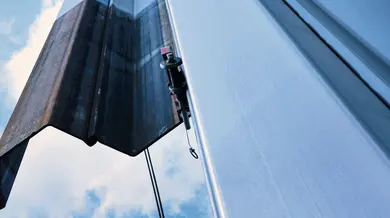
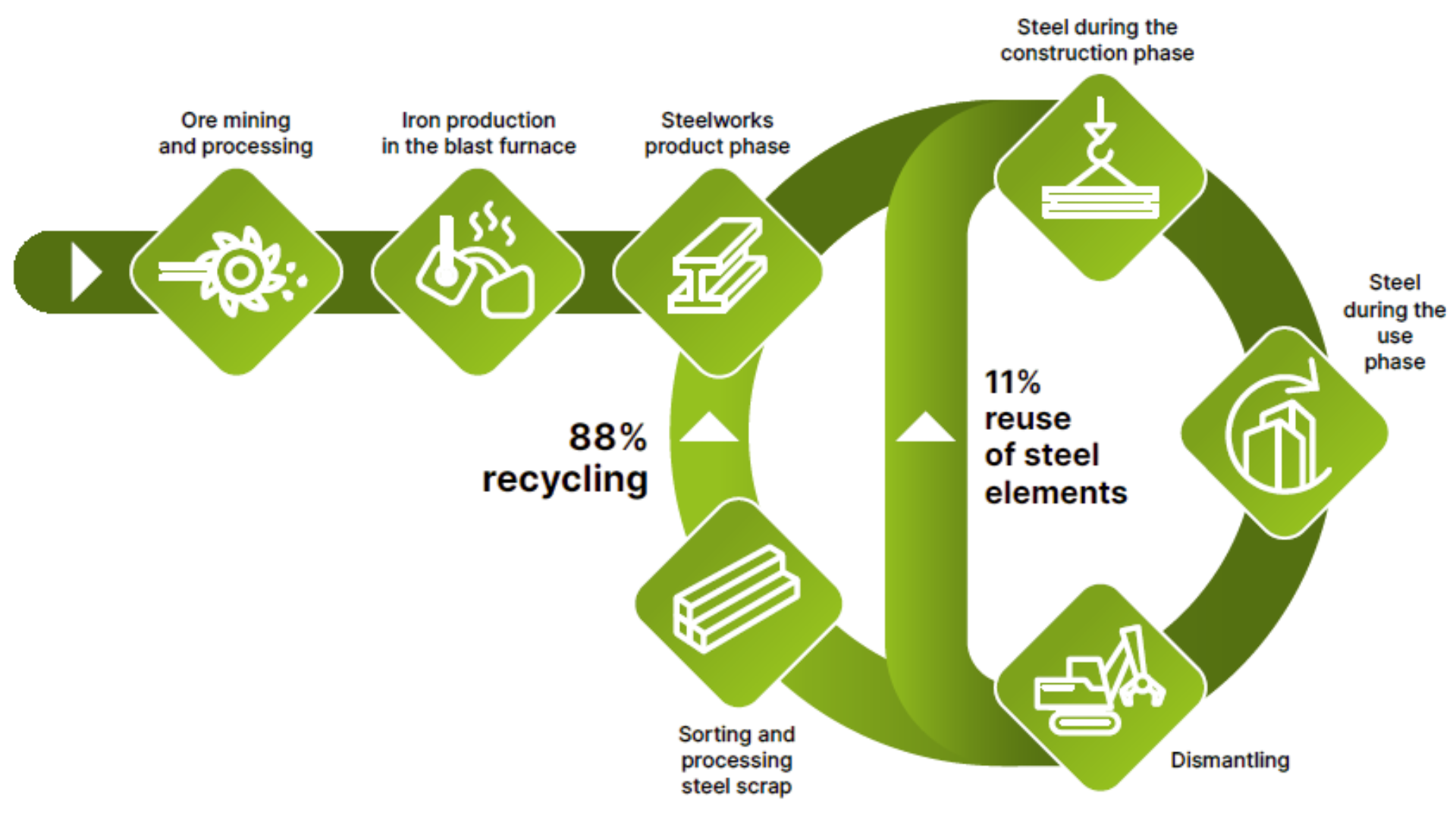
Steel is 100% recyclable without any loss of quality. The steel industry in Germany alone uses around 20 million tons of steel and iron scrap every year to manufacture new products. A well-functioning steel recycling system is already established in Germany. For example, the collection rate for structural steel at the end of its construction life is around 97%. All collected steel is sent for recycling.
The transformation to climate neutrality in the steel industry is taking place in stages, depending in part on the growing availability of green electricity and climate-neutral hydrogen. A classification system should be able to map this step-by-step transformation process and provide targeted incentives and support for the efforts and additional costs associated with the individual transformation steps. For this reason, the steel produced is divided into different categories of process ambitions and emission intensity.
The International Energy Agency (IEA) has proposed a six-stage classification system for this purpose. Based on this, the German Steel Association (supported by the Federal Ministry for Economic Affairs and Climate Protection) has founded the Low Emission Steel Standard (LESS) initiative, which aims to accelerate the development of demand for low-emission steel and enable initial sales markets. LESS is specifically designed to support the transformation of the steel industry through marking, which maps the step-by-step path to climate neutrality and allows for comparison between steel products manufactured using different processes.
The LESS system consists of several elements: Specifically, a classification scale in the labeling system illustrates whether the steel is “near-zero”2 or “low emission (A-D)”3. The thresholds used to classify the steel are based on the greenhouse gas intensity of the ton of hot-rolled steel produced and the specified scrap input. As part of a “sliding scale” – similar to the approach taken by the International Energy Agency – the limited global availability of steel scrap is taken into account, and the transformative efforts on the part of the primary and secondary steel routes are represented on a uniform scale.
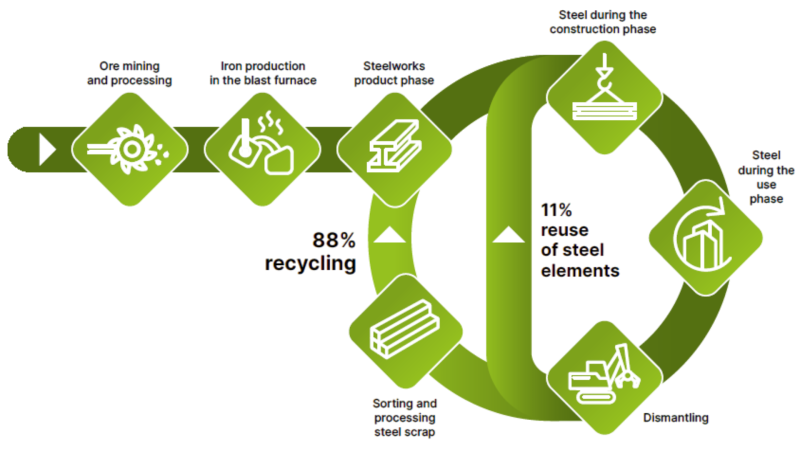
Every construction site is different. That's why our output always begins with a consultation, during which we work with our customers to select the right material and machines for a tailor-made solution. The fact is, for every challenge,
we have more than one solution at our product range. This also applies to sustainability. With a wide range of products in our portfolio, we already meet the EU's emission reduction targets for 2030.
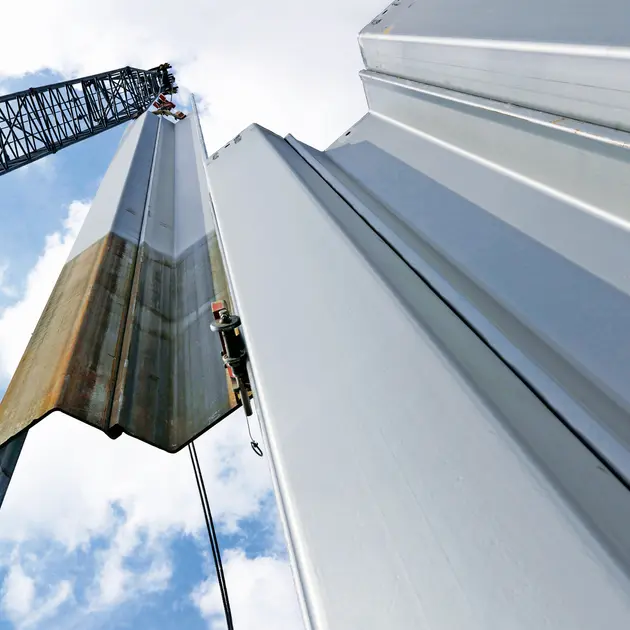
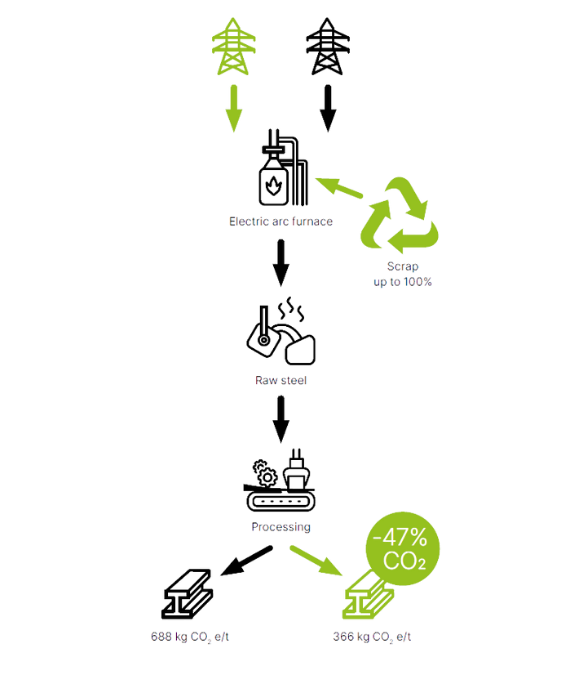
It is therefore worth comparing us with our competitors, from the manufacturing process at the material itself. With a wide range of products in our portfolio, we already meet the EU's emission reduction targets for 2030! Even without the use of green electricity, our steal beams score highly with a CO₂ value of 688 kg CO₂ e/t. Since 1996, our beams have been produced using low-emission electric arc furnaces with 100% scrap recycling.
The power supply for this comes from a residual electricity mix. There is no double counting of allocated renewable energy! For customers with an even stronger focus on their CO₂ footprint, we offer a green alternative: Beams with a CO₂ value of only 366 kg CO₂ e/t from the electric arc furnace route.
With 100% scrap recycling and green electricity from wind power directly from the producer. With this product range, you can already save 47% in CO₂ emissions today!
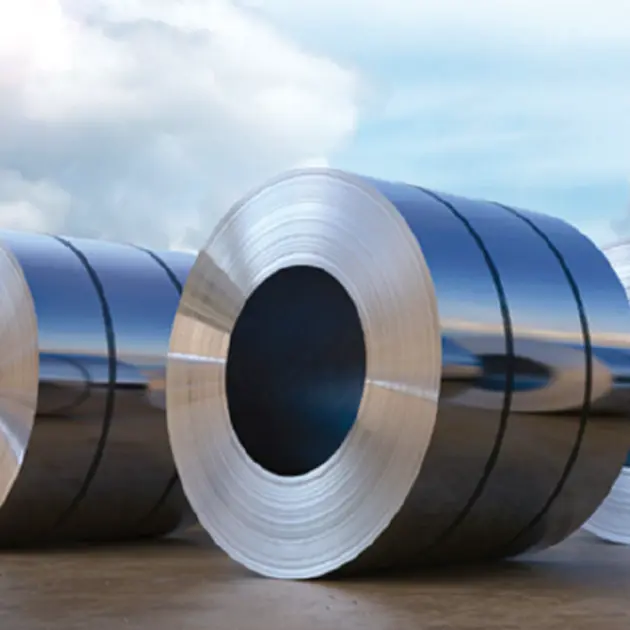
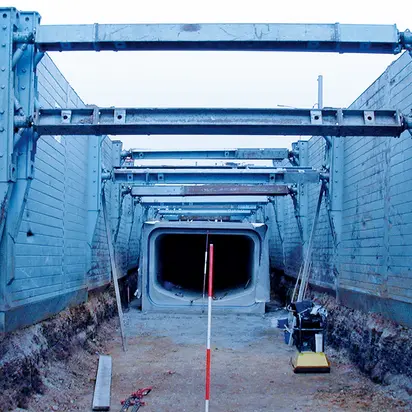
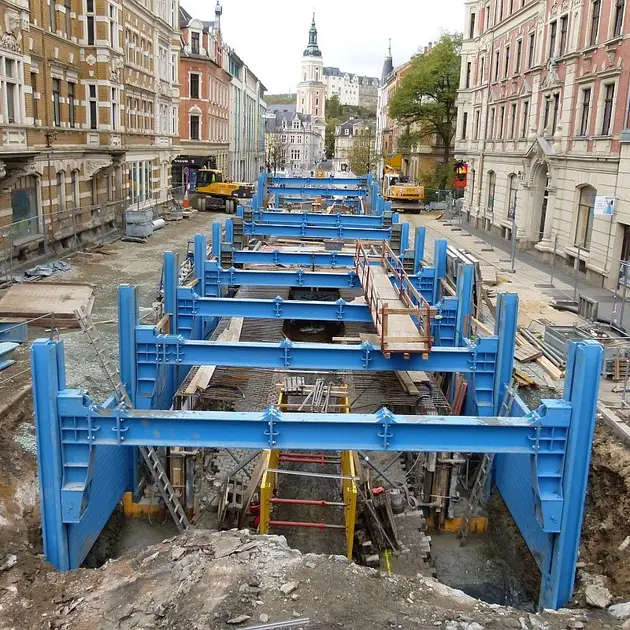
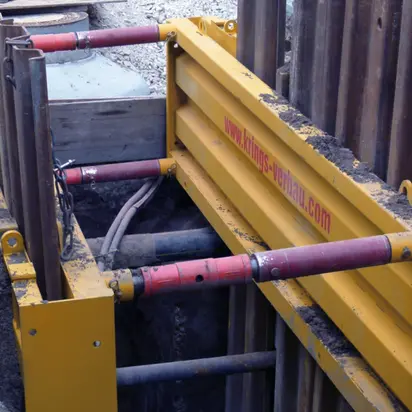
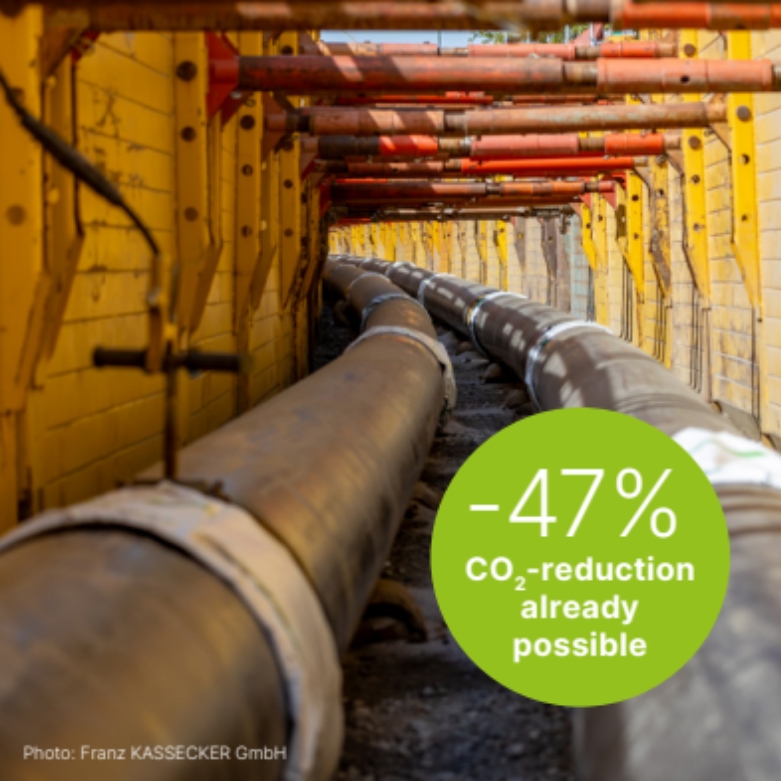
Filtering cartridge CO₂-reduced steels possible
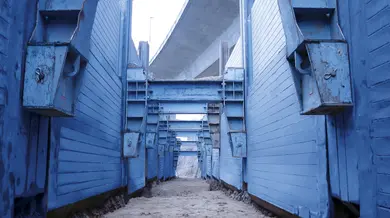
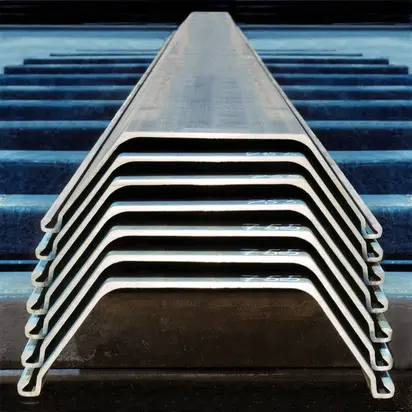
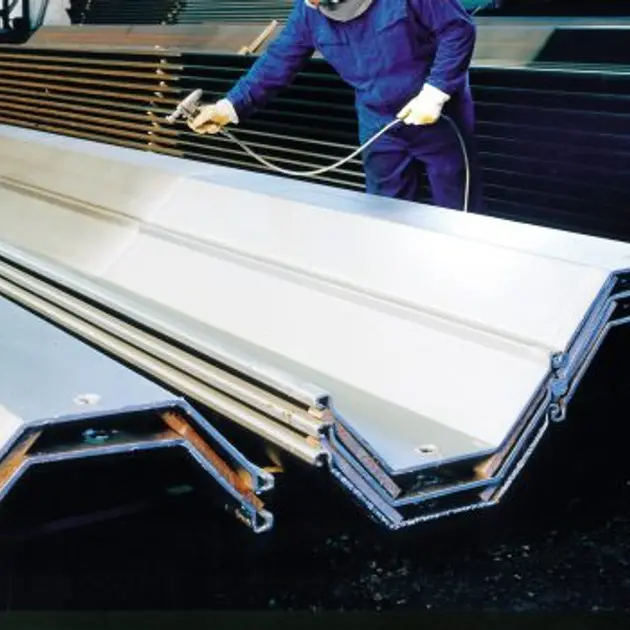
CO₂-reduced cold-rolled coils can also be used at our trench shoring panels, which undergo the same steel manufacturing process (use of grey/green raw material as in Steel Section).
Cold-rolled coils offer good surface quality and precision, which is advantageous for many applications, including Trench Shoring. The material is selected according to the requirements of the respective product, such as strength, flexibility, and corrosion protection.
In many cases, more specialized types of steel or alloyed steels are also used for Trench Shoring systems, offering even more robust properties.
Hire promotes the circular economy
Sustainability is not an option - it is our responsibility!
terra infrastructure is one of the world's most renowned suppliers in the field of trench shoring. We offer a wide range of trench shoring and supplementary products. Our portfolio also includes temporary steel and plastic site roads.
Hire shoring systems is often the most economical option at construction projects – especially large-scale projects. With our extensive hire fleet, we are always able to provide the optimal system, even for large-scale projects.
Renting means much more than just cost savings: the multiple use of our products significantly extends their life cycle. This increases utilization and reduces resource consumption – a decisive contribution to environmental protection. In addition, no additional CO₂ is released during the rental period. Rental therefore actively protects the environment and is a central component of the circular economy.
At the end of the life cycle, what remains is pure steel scrap, which can be 100% recycled and used to manufacture new trench shoring elements.

 (1).png?format=webp&width=630&height=630)
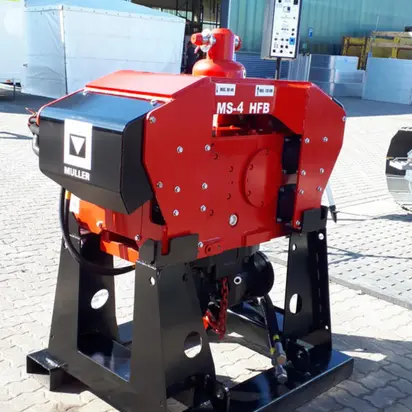
Electrification of construction machinery
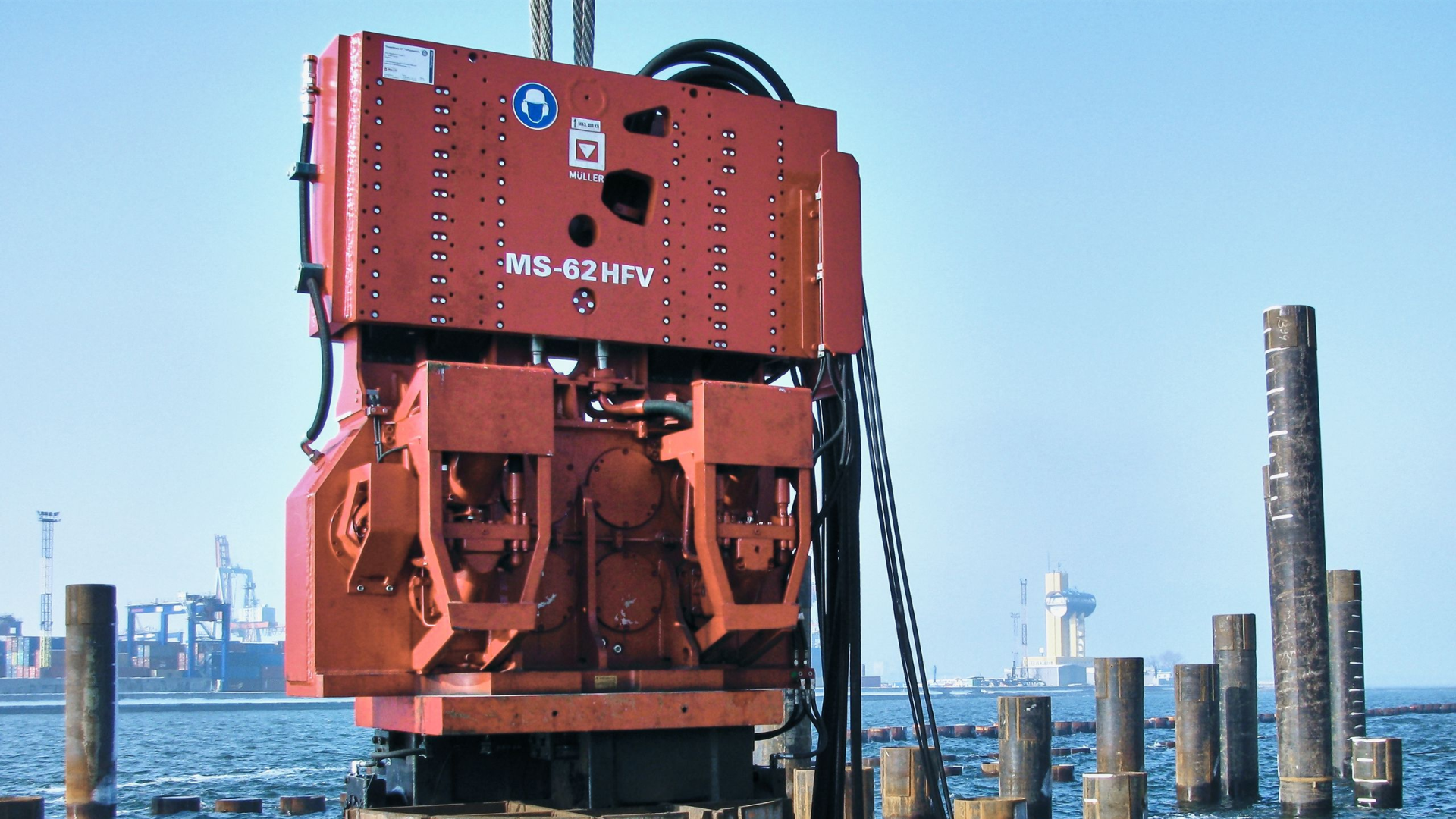
Electrical vibratory hammers have been an integral part of the MÜLLER vibration technology product range since the 1960s. At that time, the electric motors mounted on the vibratory hammers were still powered by diesel-driven generators. Mobile hydraulics were not yet widely available, which is why electrical motors were the preferred drive solution.
The three-phase asynchronous motors used were robust and easy to handle, but also heavy and not very powerful – characteristics that still apply today (compared to mobile hydraulic components).
With the advent of mobile hydraulics in the late 1970s and early 1980s, drive technology changed. Hydraulic motors and pumps impressed with their high power density, i.e., high output at a compact installation space. Diesel remained the preferred energy source: diesel engines were now used to operate pumps, which in turn supplied the hydraulic motors on the vibratory hammer – a departure from the diesel generators that had previously powered the electric motors.
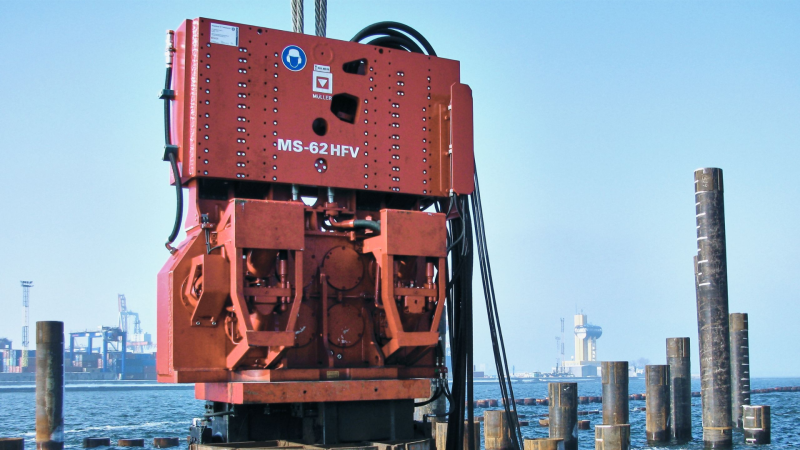

Our solution at MÜLLER: zero emissions at half the price
The current situation has changed significantly: modern electrical motors, such as permanent magnet synchronous motors (PMSM), offer significantly better output than the electrical engines of the 1960s. At the same time, the need to reduce CO₂ emissions requires a move away from conventional diesel as an energy source.
Our solution addresses three key aspects:
- We are retaining the established hydraulic system with its high energy density. This means that we will not only continue to operate all vibratory hammers on the market, but now also emission-free ones.
- When using electrical components, we rely on the latest technologies, such as PMSM motors, which offer maximum output in a compact installation space.
- We offer a completely emission-free electrical-hydraulic drive unit (at use of 100% electricity from renewable energies). This can be powered by battery or, if possible at the construction site, by direct connection to the existing construction site power supply. The battery has sufficient capacity to ensure operation for an entire working day. At the end of the day, only the power pack needs to be replaced, which is a huge advantage. This means 100% emission savings and 50% investment savings at a new vibratory hammer.
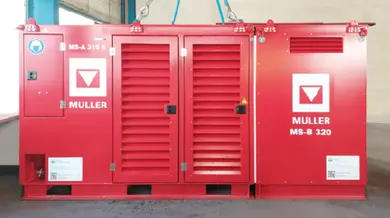
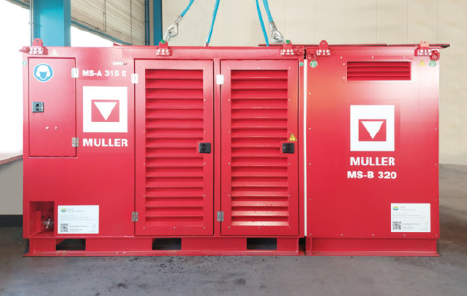
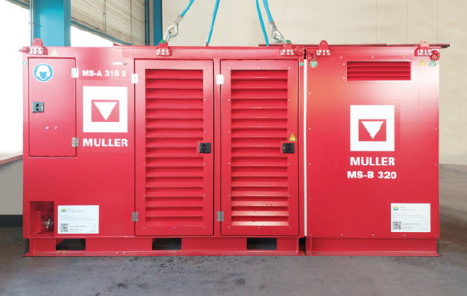
Our four modular power packs, including modular battery storage systems, can be operated completely independently, respectively connected to the power grid in parallel to extend the service life or reduce the battery size. This allows vibratory hammers up to the size of an MS-28 HFV (medium-sized) to be operated:
• MS-A 170 E
170 kW hydraulic output -> approx. 290 l/min. oil flow rate
• MS-A 240 E
240 kW hydraulic output -> approx. 410 l/min. oil flow rate
• MS-A 315 E
315 kW hydraulic output -> approx. 540 l/min. oil flow rate
• MS-A 410 E
410 kW hydraulic power -> approx. 700 l/min. oil flow rate
Our self-sufficient power packs offer the possibility of optimally utilizing the range of the batteries through innovative solutions on large construction sites or at longer operations. Construction machines can be designed to operate efficiently even under these conditions, with operational continuity ensured through the use of mobile charging units or regular battery changes. In addition, the battery storage units can be fully recharged overnight using a standard construction site power distributor (63A).
RTG Hybrid
With our products from the RTG piling technology division of the internationally active Bauer Maschinen Group, we are your specialist for energy-efficient vibration, piling, and pressing technology. Our RTG telescopic and rigid piling rigs are designed to transmit high tensile and compressive forces and to absorb torques. Together with their high installed motor capacities, they are ideally suited as carrier devices for a wide range of applications, e.g., excavation pits, pile foundations and piling, bridge and harbour engineering, and urban construction sites with emission restrictions.
To drive the decarbonization process forward in a targeted manner, you will find the eRG19 hybrid telescopic guide in our product range. The hybrid drive combines two different drive types: the diesel engine for maximum output when high force is required, and the electric motor for emission-reduced and noise-reduced operation, ideal for use in environmental protection areas or inner-city construction sites with strict noise protection and exhaust gas regulations. The advantages of this technology are compelling:
• Flexibility: Demand-oriented power control between electric and diesel engines – enabling use in areas without a direct power supply and in environmentally sensitive zones.
• Productivity: Increased thanks to improved efficiency
• Fuel efficiency: Fuel consumption reduced by up to 68% thanks to the supplementary electric drive.
• Emission reduction: Up to 45 kg/h reduction in CO₂ emissions – ideal for meeting sustainability targets.
• Optimized paralleles working of main and auxiliary consumers
• Noise reduction: Quieter operation at more sensitive projects – reduced sound power by up to 2 dB (A).
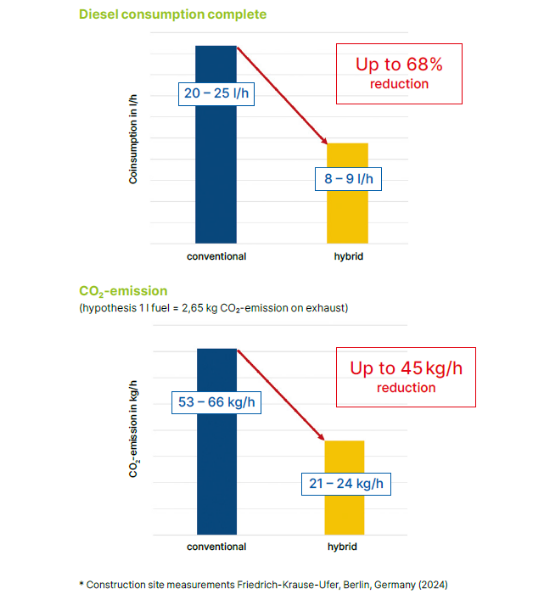
RG 19T Hybrid – actual construction site measurements
In addition to RTG's 430 kW diesel engine, the RG19 T hybrid power pack uses an 80 kW electrical engine that can be operated either independently or simultaneously.
• The diesel engine ensures that the installation can be used at any time, even without an additional power connection.
• The electric motor can be switched on when a power connection is available.
• The combined output of the two engines is 510 kW and represents a plug-in hybrid.
Modular hybrid line