
terra infrastructure delivers future technology in the drilling sector
Categorie: References
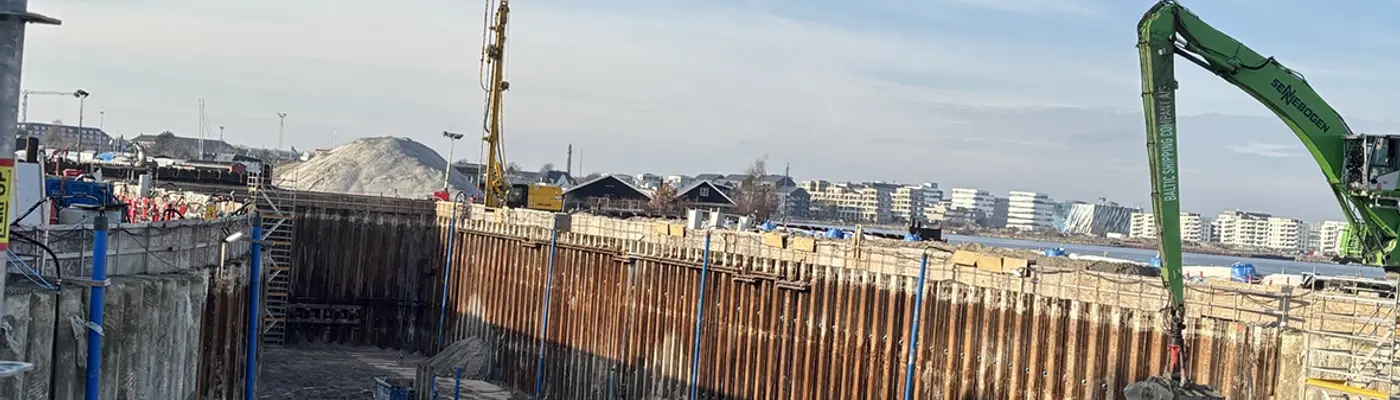
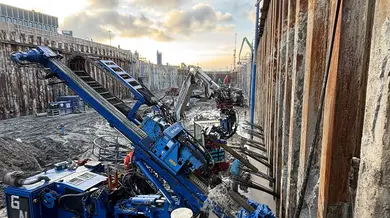
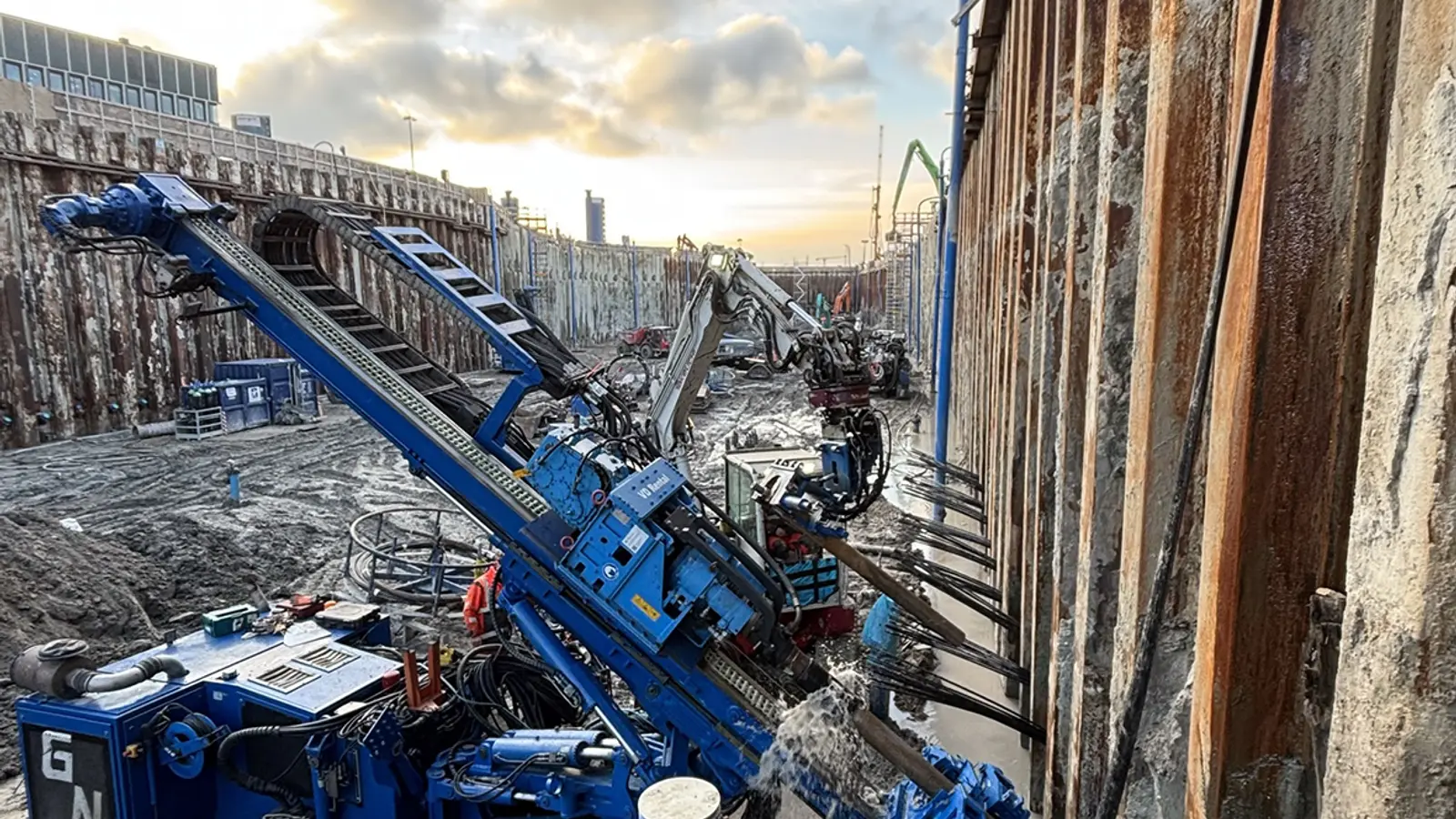
The Nordhavn Tunnel is currently one of Denmark's most significant infrastructure projects. The project, which is being carried out by the Danish Road Directorate (Vejdirektoratet), aims to provide lasting relief for urban traffic in northern Copenhagen and significantly improve connections to the expanding Nordhavn district. Several specialist civil engineering companies were commissioned to anchor the sheet piles driven into the ground to secure the excavation pit, with the application of various pieces of equipment and technical methods. In addition to standard drill drives, Grundbau Nord GmbH used the VibroDrill VD 150 from terra infrastructure, among other equipment. Equipped with state-of-the-art technology, the vibratory drilling rig was able to demonstrate its strengths in terms of performance, precision, and quality, particularly during drilling in the highly heterogeneous building ground consisting of clay, limestone, and flint.
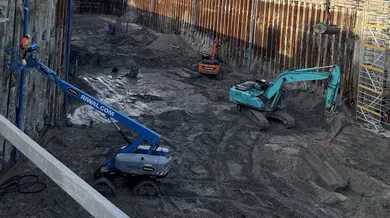
The tunnel's length is approximately 1.4 kilometers, and it is a key infrastructure project designed to relieve traffic congestion in the Østerbro district and improve connections to the up-and-coming Nordhavn harbor area. Approximately 700 meters of the structure run as an underwater tunnel beneath Svanemøllehavn Bay, with the remainder mainly constructed using the proven cut-and-cover method – a technically demanding method of tunnel construction in urban environments. The aim of the project is to manage traffic flows more efficiently, divert heavy goods traffic away from residential areas and, at the same time, lay the foundations for a possible eastern ring road around Copenhagen. The execution of the project is being carried out by a joint venture between MT Højgaard Danmark and BESIX, supported by NIRAS, Jacobs, and Bravida Danmark in planning and consulting. With a project volume of around 2.6 billion Danish kroner, construction began in 2024 and the initiation / commissioning is scheduled for the end of 2027.
The Nordhavn Tunnel is an important component of Copenhagen's long-term transport strategy. The new linkage will connect Østerbro and Nordhavn more efficiently, improve access to new development areas, and sustainably enhance mobility in the north of the city. There is a particular focus on climate-friendly construction: optimized concrete and steel types, increased material transport by ship, and extensive recycling measures are expected to reduce the carbon footprint by 30 percent compared to conventional construction methods. The project thus connects modern engineering technology with urban planning foresight and sustainable responsibility.
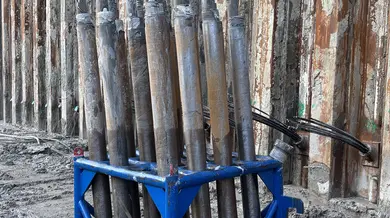
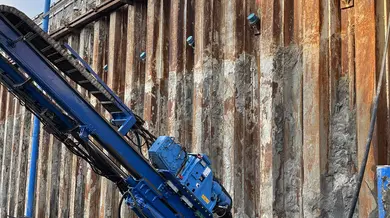
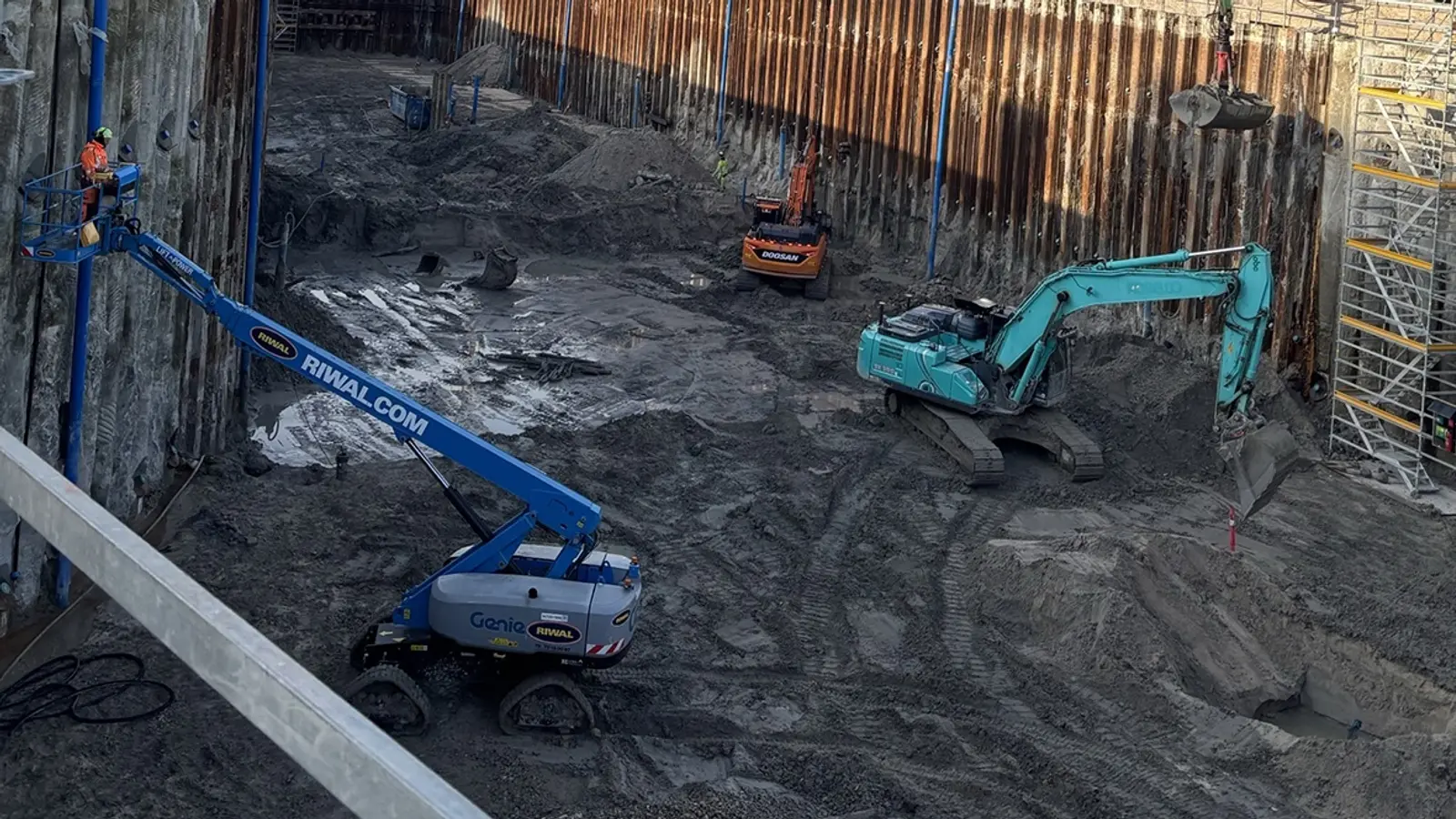
State-of-the-art technology was also used to anchor the sheet piles driven into the ground to secure the excavation pits. A total of three to four anchor layers were installed to secure the Sheet piles for each of the excavation pits, which had a length of approximately 300 meters and a depth of 12 meters. The first anchor layers were drilled at depths of between 25 and 35 meters. Pipe sockets were welded to the sheet piles for this purpose, to which the carrier crane or drilling rig was attached. The drilling work was carried out using the duplex method, i.e., with an outside and an inside rod. “During operation, the outer rod with a ring drill bolt secures the borehole and prevents water or soil from entering, while a second rod operates inside, operating a full drill bit and later filling the cement slurry,” explains Kenneth Paetsch, Grundbau Nord GmbH.
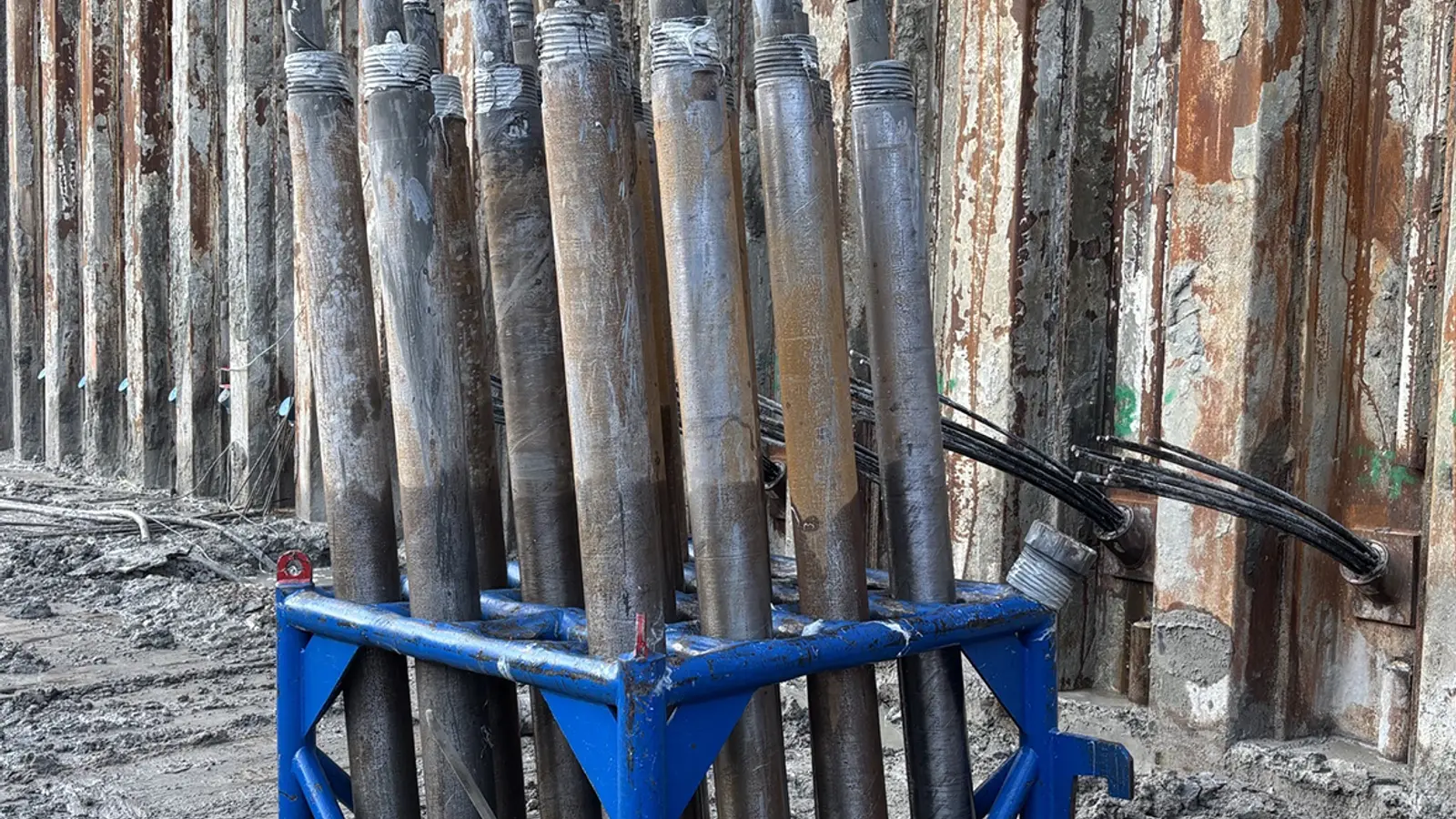
Drilling was carried out using the duplex method with a downward drilling angle of between 25 and 30 degrees. The drill rods and pipes were used in two-meter sections and placed on the drilling rig with the aid of an excavator. Once the final depth of around 27 meters had been reached, the cement was driven via the inner rods. The inner rods were then removed and the strand anchors inserted into the outer pipes to anchor the Sheet piles. “The anchor was then grouted and the outer rods pulled out,” Paetsch continues.
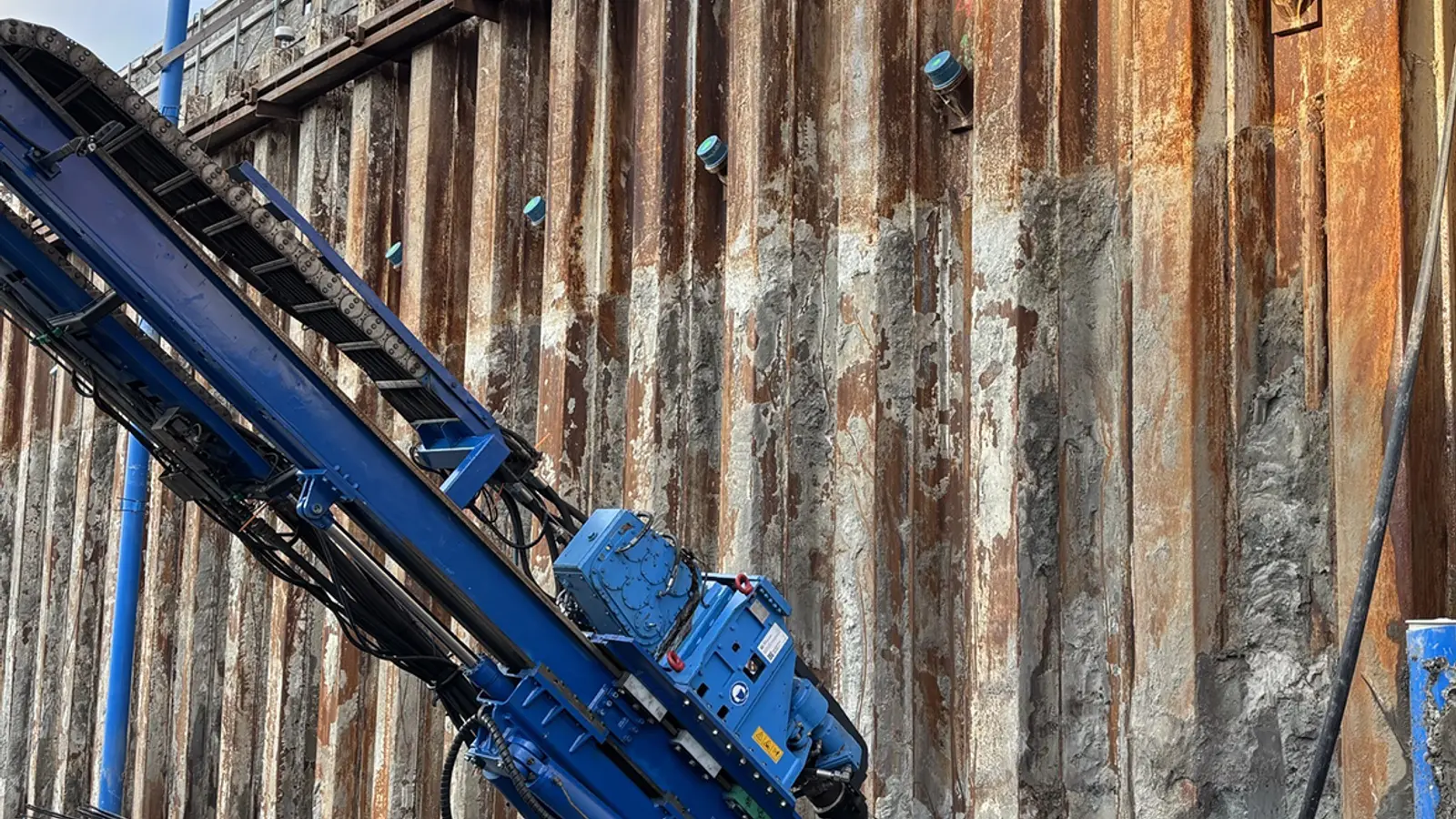
The VibroDrill VD was developed for anchor drilling, micropiles, geothermal energy, geotechnical engineering, and overburden drilling, and really shows its strength when tricky ground conditions call for precise work. It works with a centrifugal force of 240 kN at frequencies up to 120 Hz and can achieve drilling depths of up to 100 meters. Despite its high output, the system remains compact and flexible in use with a dead weight of 500 kilograms to 1.5 tons, depending on the model. An integrated vibration damping system reduces stress on people and machines, while low noise emissions of less than 100 dB(A) sound power enable work in inner-city urban areas. The VibroDrill VD 150 impresses not only with its efficiency, but also with its durability and ease of use.
In the current anchor drilling project in Copenhagen's North Harbor, the contractor initially relied on conventional drilling technique: two drilling rigs were equipped with standard hammer drills, all with percussion mechanisms, which have been reliable for many years. The teams needed an average of two to three hours per borehole of around 25 meters. Later on, a third drilling rig – an HBR 605 – was equipped with the VibroDrill VD 150, and the difference was immediately noticeable. For comparable holes in the upper layers, the drilling time was reduced to around 40 minutes. The VibroDrill really came into its own with longer holes over 15 meters. “Where the percussion mechanism loses its effectiveness at greater depths, the VibroDrill keeps the vibration energy constant over the entire drilling length,” says Paetsch. “This allowed the drilling to be carried out much faster and more evenly.” In the bottom layers, where the flintstone was directly exposed, the output of the VibroDrill and the percussion mechanism then evened out again, according to Paetsch. In addition, the powerful VibroDrill VD 150 pushed the HBR 605 to its output limits and, as the ambient temperature rose, caused the carrier crane's hydraulic oil to heat up significantly – an issue that has now been taken into account in the machine's configuration. Grundbau Nord has since used a smaller VD100 on an HBR 605 on other construction sites in Germany, such as the Braunschweig Clinic and the Hotel Atlantik in Hamburg. There, the ratio between the carrier crane and the drill drive is perfect, also from a hydraulic point of view.
When considering the boundary conditions, it became apparent that the VibroDrill VD 150 and the VibroDrill VD 100 offer considerable efficiency advantages, especially for longer boreholes in a wide variety of soil conditions. This has proven to be a valuable supplement to classic percussion mechanisms on this and other sites. Against this background, Kenneth Paetsch and his father Michael Paetsch, owner and managing director of Grundbau Nord GmbH, are using this innovative technology at special civil engineering projects under a wide variety of conditions in order to gain further experience.