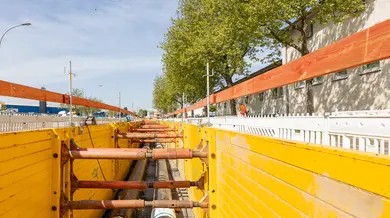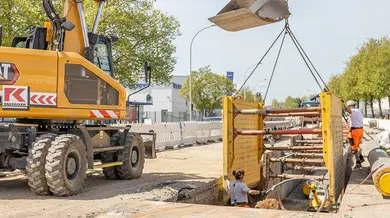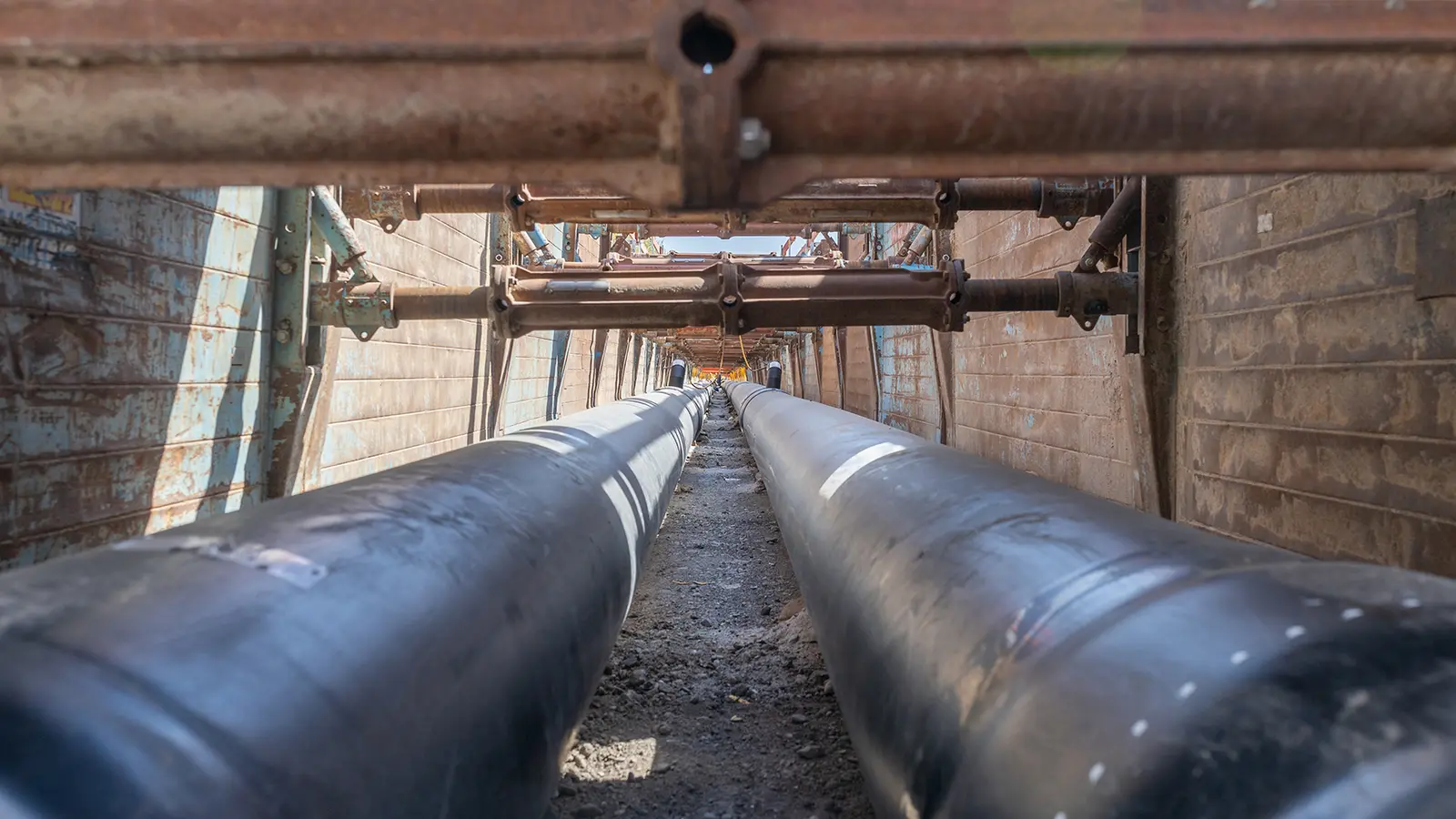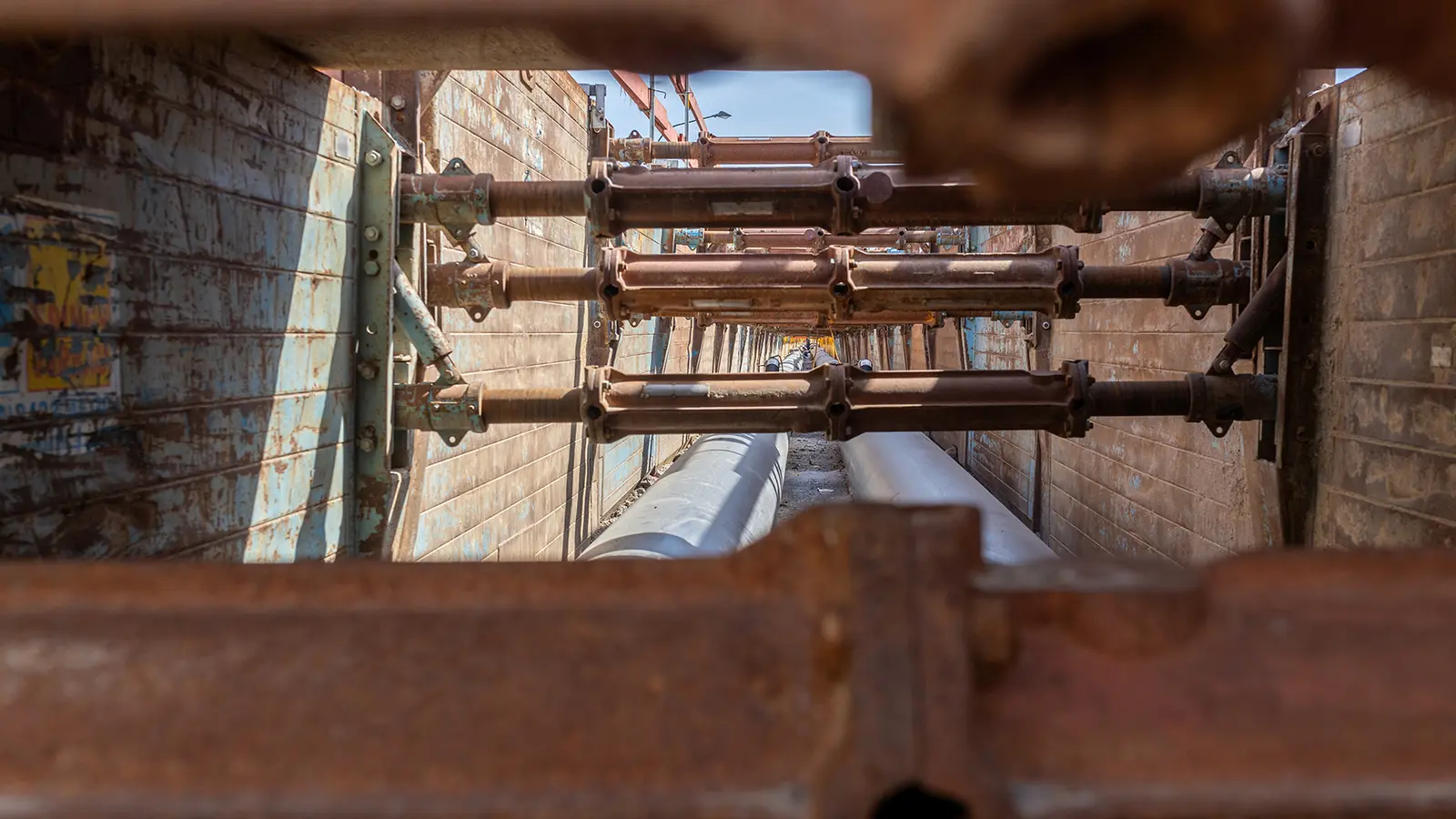


Shoring systems from E+S and Krings secure the pipe trench
Categorie: References
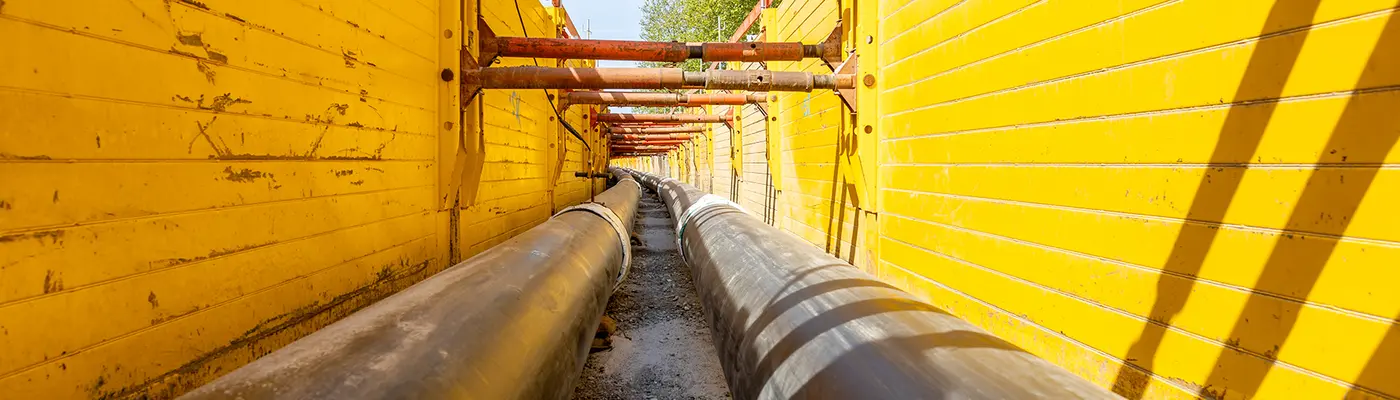
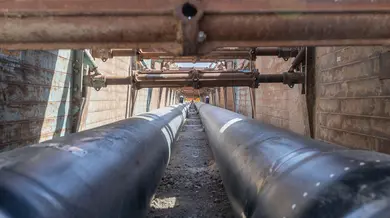
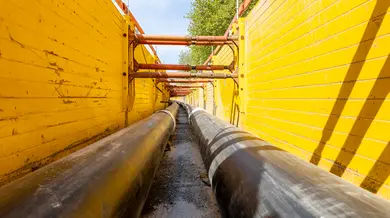
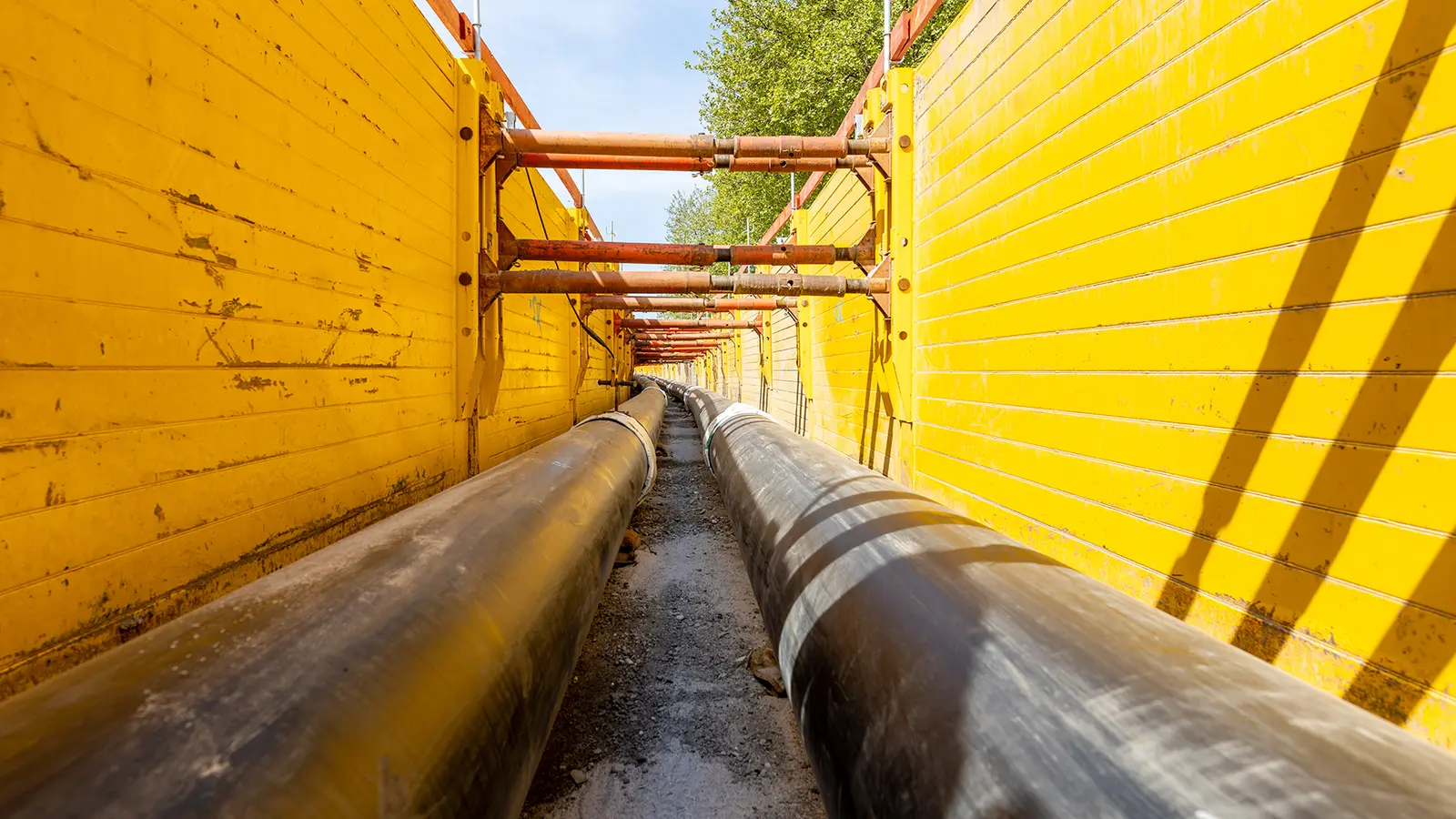
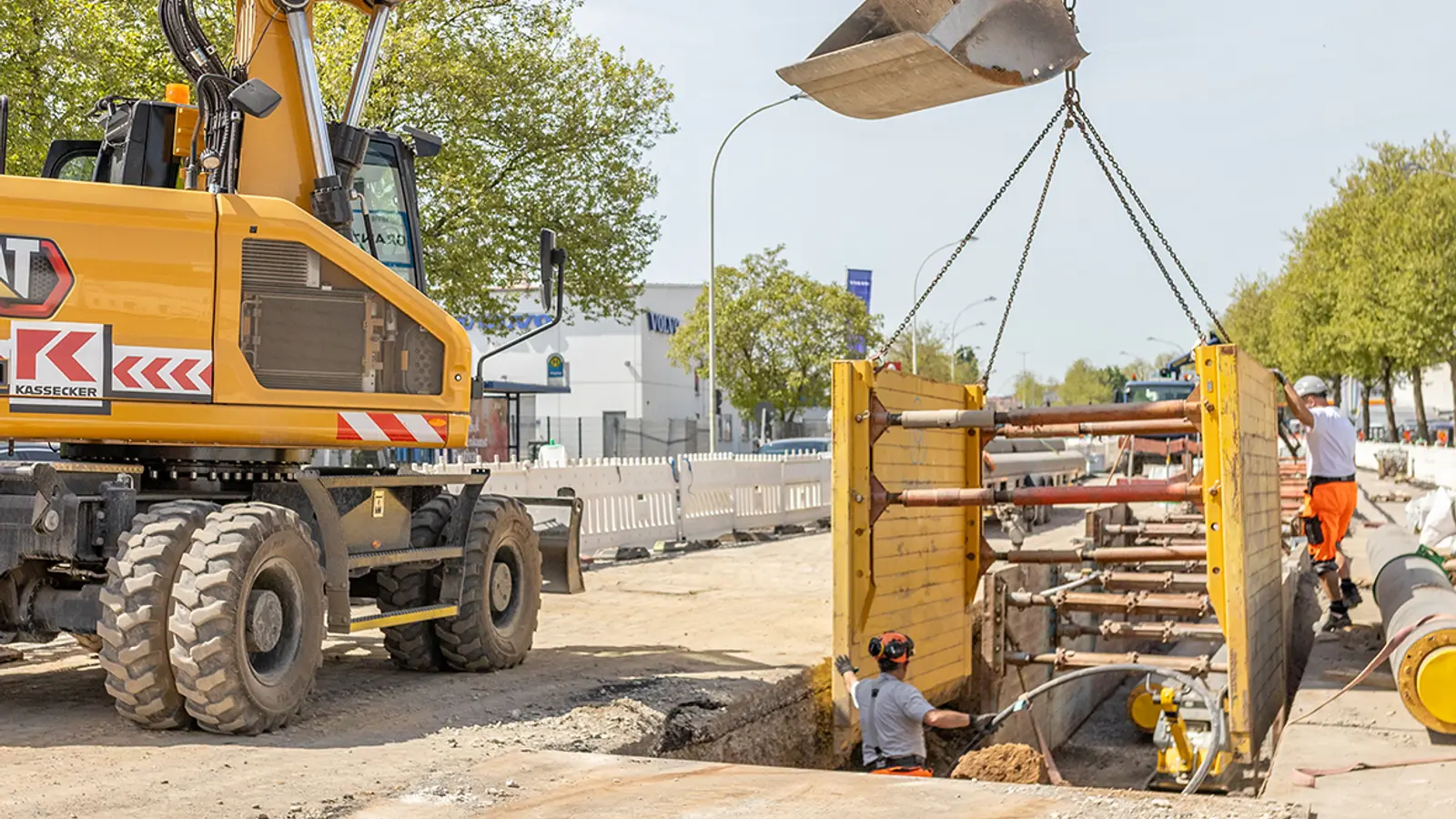
EnBW Energie Baden-Württemberg AG is modernizing the district heating network in the Heilbronn urban area. As part of the “Heilbronn Steam Network Conversion” project, the existing steam network is being converted to a hot water network. This involves removing the old steam and condensate pipes, which previously ran in a concrete trough channel under the road. Instead, new hot water pipes will be laid directly in the ground. Franz KASSECKER GmbH, Waldsassen, has been awarded the contract for construction lot 1, which has a length of around 3.8 km. To ensure safety during work in the pipeline route, the company used the E+S LBR lightweight shoring system and the KS 60 shoring box from KRINGS Verbausysteme, terra infrastructure GmbH.
The construction work is part of a multi-year project to convert the district heating network from vapour to hot water operation. According to the client, the modernization of the district heating network in Heilbronn involves several important measures. At the conversion to gas and hydrogen, the existing coal-fired power plant will be replaced by a combined cycle gas turbine (CCGT) power plant in order to reduce CO₂ emissions and thus make the district heating supply even more sustainable. In the long term, there are plans to switch to low-CO₂ hydrogen. As part of the renewal of the pipeline network, the old steam network will be replaced by a more efficient and environmentally friendly modern heating water network. This measure will reduce network losses and increase energy efficiency. To secure the district heating supply, a heat storage facility and a heating water boiler system will also be built.
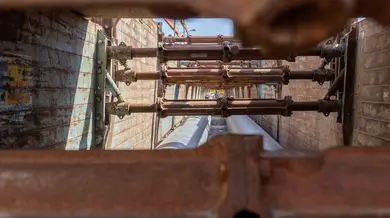
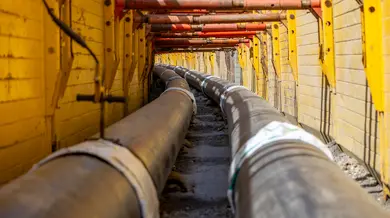
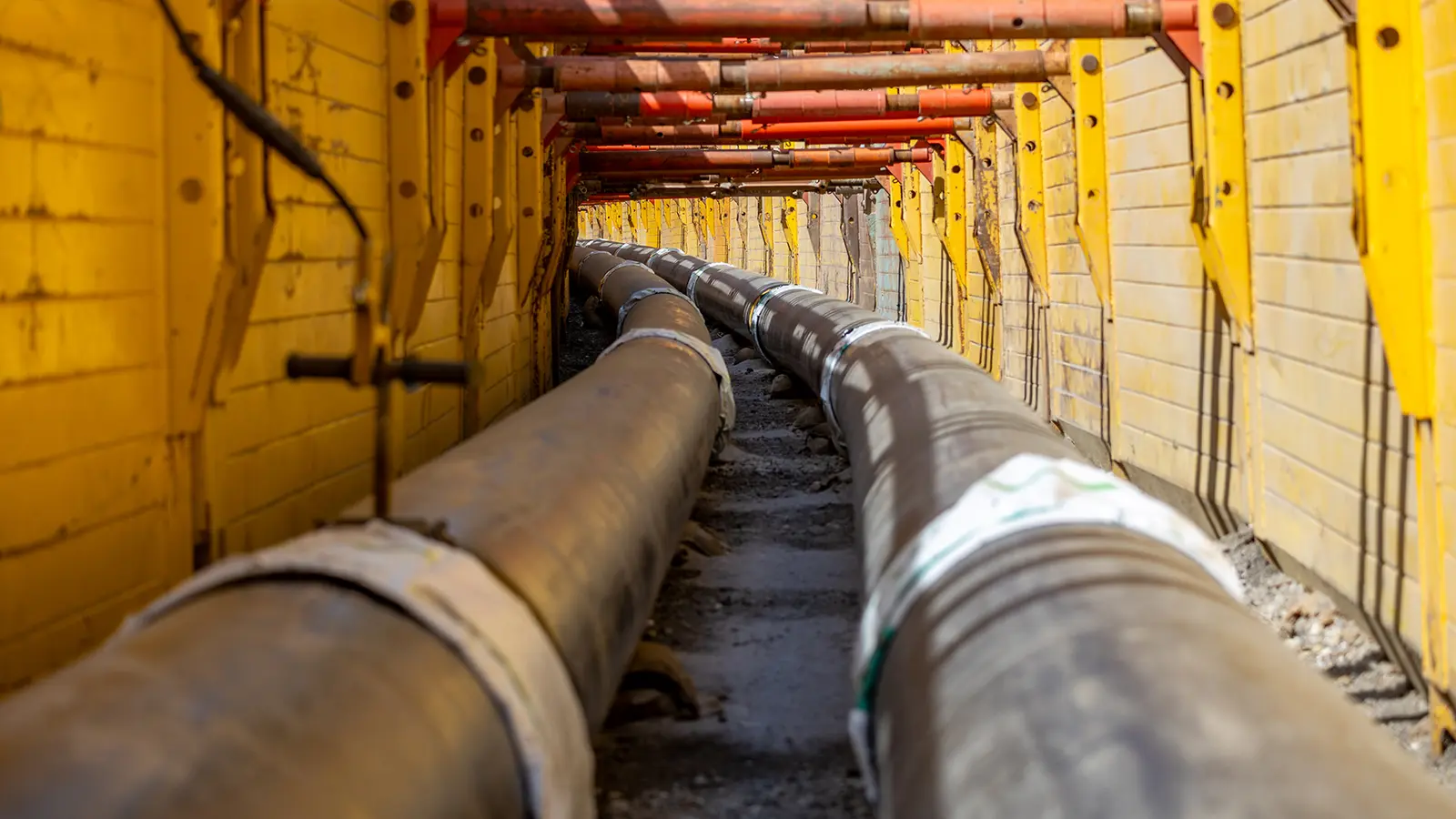
In the first construction phase, approximately 3.8 kilometers of the pipeline network will be modernized between May 2023 and August 2025. Franz KASSECKER GmbH laid the new plastic-coated pipes (KMR) for the supply and return lines with a nominal diameter of up to DN 350 directly in the ground, while at the same time dismantling the existing pipes and completely demolishing the concrete trough channel and the associated shaft structures. In addition to the district heating pipeline, a cable protection pipe system including a 4-fold Speedpipe cable protection pipe was also installed. According to Nico Maschewski, site manager for civil engineering and pipeline construction at Franz KASSECKER GmbH, this was done in successive sections of approx. 50 to 100 meters, although during a construction phase in the spring, a section of approx. 500 meters in length in Karl-Wüst-Straße in Heilbronn was renewed in one piece for structural reasons. After excavating the pipe trench, the existing old concrete trough channel was demolished, requiring the disposal of various components containing asbestos. “We then adjusted shoring units and excavated the pipe trench to the final installation depth of 1.42 meters to 3.56 meters,” Maschewski continued. The E+S LBR lightweight shoring and the KRINGS Verbausysteme KS 60 shoring box were used here, which score points with their low weight, high load-bearing capacity, and great flexibility.
“The E+S LBR lightweight shoring system is the smallest and lightest shoring box in the E+S range, making it particularly suitable for use in inner-city areas—such as cable and pipeline construction for current, gas, and water—where only small construction machines are generally used,” explains Fritjof Heiland, technical consultant at terra infrastructure GmbH. “The combination of base and extension plates allows trenches to be secured to depths of up to 3.5 meters. As with all extension plates, installation is simple, quick, and safe, with the linkage via stanchions and bolts leaving no room for error,” emphasizes Heiland. The same applies to the stable KS 60 shoring box, which is also designed for high load-bearing capacity, low weight, and high safety. This makes the box the ideal system for small and medium-sized inner-city sewer construction projects, but also for open terrain. The shoring struts of the system are compatible with those of the KS 100 boxes. The load is absorbed by articulated spring mushrooms between the struts and the shoring plate. This means that installation and removal can be carried out quickly and easily with smaller excavators, both in the adjustment and lowering processes.
First, the ground in the area of the pipe trench base was exchanged and approximately 15 to 20 centimeters of material with bearing capacity was installed. Then the 12-meter-length plastic jacket pipes for the supply and return lines could be pulled in and professionally welded. “In addition to the traditional method of laying district heating tubing, which involves installing U- or Z-expanders to compensate for the thermal expansion of the tubing, the plastic-coated tubing in Heilbronn was also thermally prestressed in sections,” says site manager Maschewski, who points out another special feature. Deviating from the 10 percent radiographic testing required by the German Energy Efficiency Association for Heating, Cooling and CHP (AGFW), which involves random testing of 10 percent of all welds at AGFW worksheet FW446, EnBW required 100 percent radiographic testing. Instead of random sampling, all weld seams are subjected to an X-ray inspection. This means greater safety and ensures that every single weld seam is checked for internal defects such as cavities, inclusions, misalignments, or cracks.
After complete laying, NDT, and sleeve installation, and, under certain circumstances, thermal prestressing, the cable strands are sanded in, the cable protection pipe system is installed, and the pipe trench is professionally backfilled to ensure the stability and functionality of the cable. In a first step, the cable trench was filled to approximately 60 percent of the pipe trench capacity and then further filled in layers with suitable backfill material. This is done in layers of about 20 to 30 cm, each of which is compacted to prevent settlement. Finally, the road surface was restored.
According to site manager Maschewski, the use of the shoring systems went just as smoothly as the Logistics. Construction lot 1 is expected to be completed by August 2025.