

Precision, coordination, and innovative technology as the key to success
Categorie: References
The preparatory work for the demolition and reconstruction of a pipe bridge over the Emscher River presented the construction partners with challenges that were not usual. “No space, no options, and many requirements in terms of traffic and water” – this is how Oliver Knipping, Technical Manager at Klaus Martin Hochbau-Tiefbau GmbH, Rhede, describes the unusual project. In this situation, in addition to perfect project management and the construction expertise of the executing company, the customized technical solutions provided by terra infrastructure GmbH also contributed significantly to the success of the first project phase.
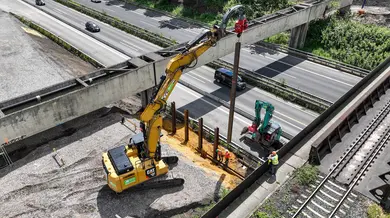
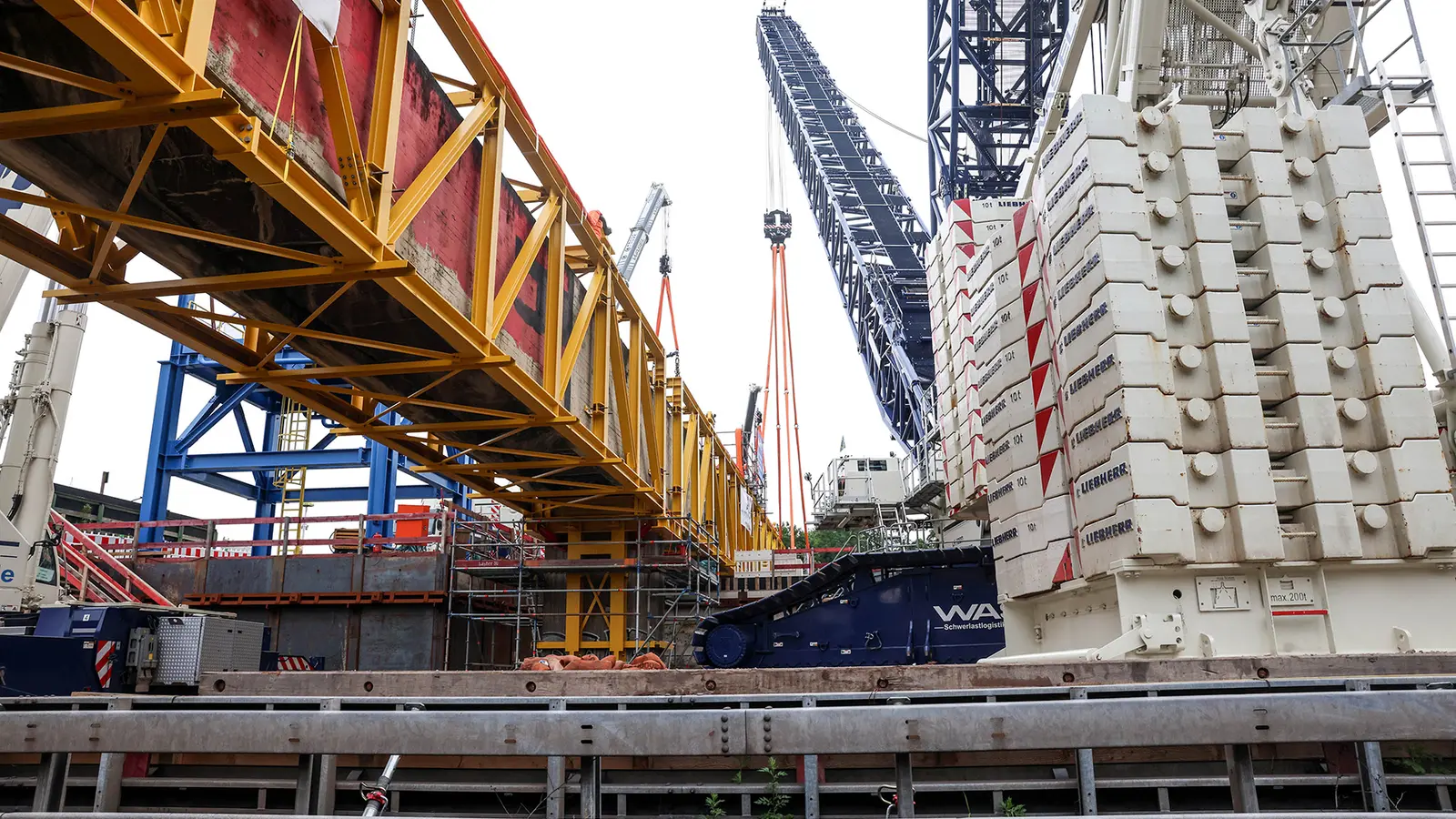
The old pipe bridge on Lichtenhorst road between Ebel and Welheimer Mark had to be rebuilt to make room for the planned expansion of the A42 to six lanes. In the fall of 2024, preparatory construction work began for the installation of the new bridge segments, which took place in June 2025 during a 72-hour full closure. Klaus Martin Hochbau-Tiefbau GmbH was responsible for the civil engineering work, site setup, construction of the new bridge foundations, and demolition of the reinforced concrete skeleton, abutments, and reinforced concrete girders of the old bridge. The new bridge has a larger span to meet the increased traffic and space requirements of the coming decades.
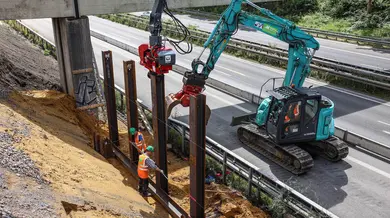
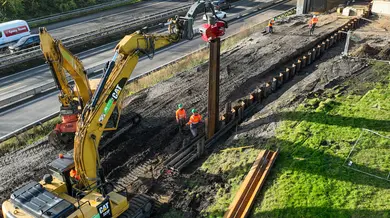
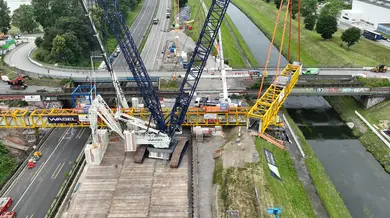
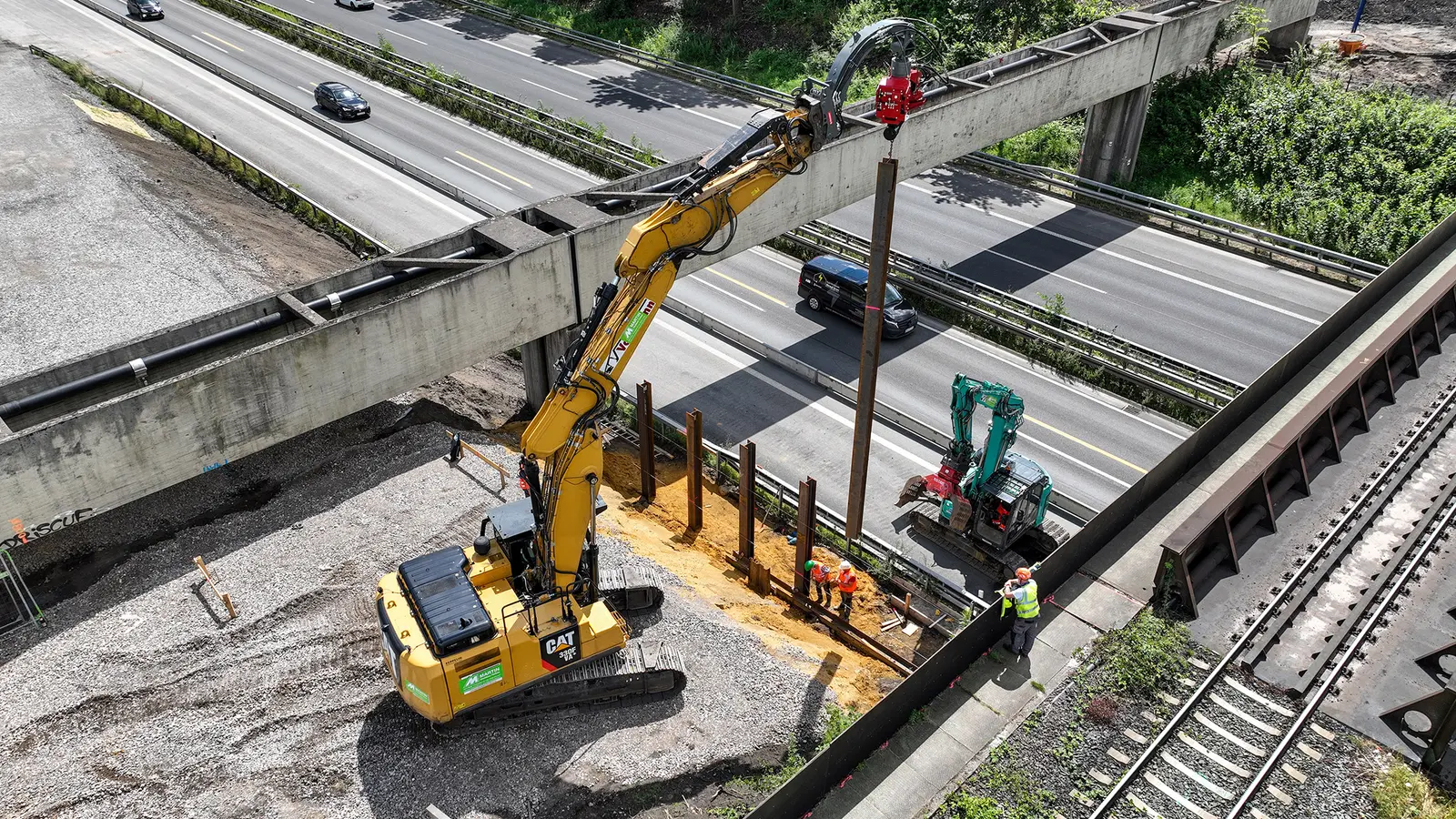
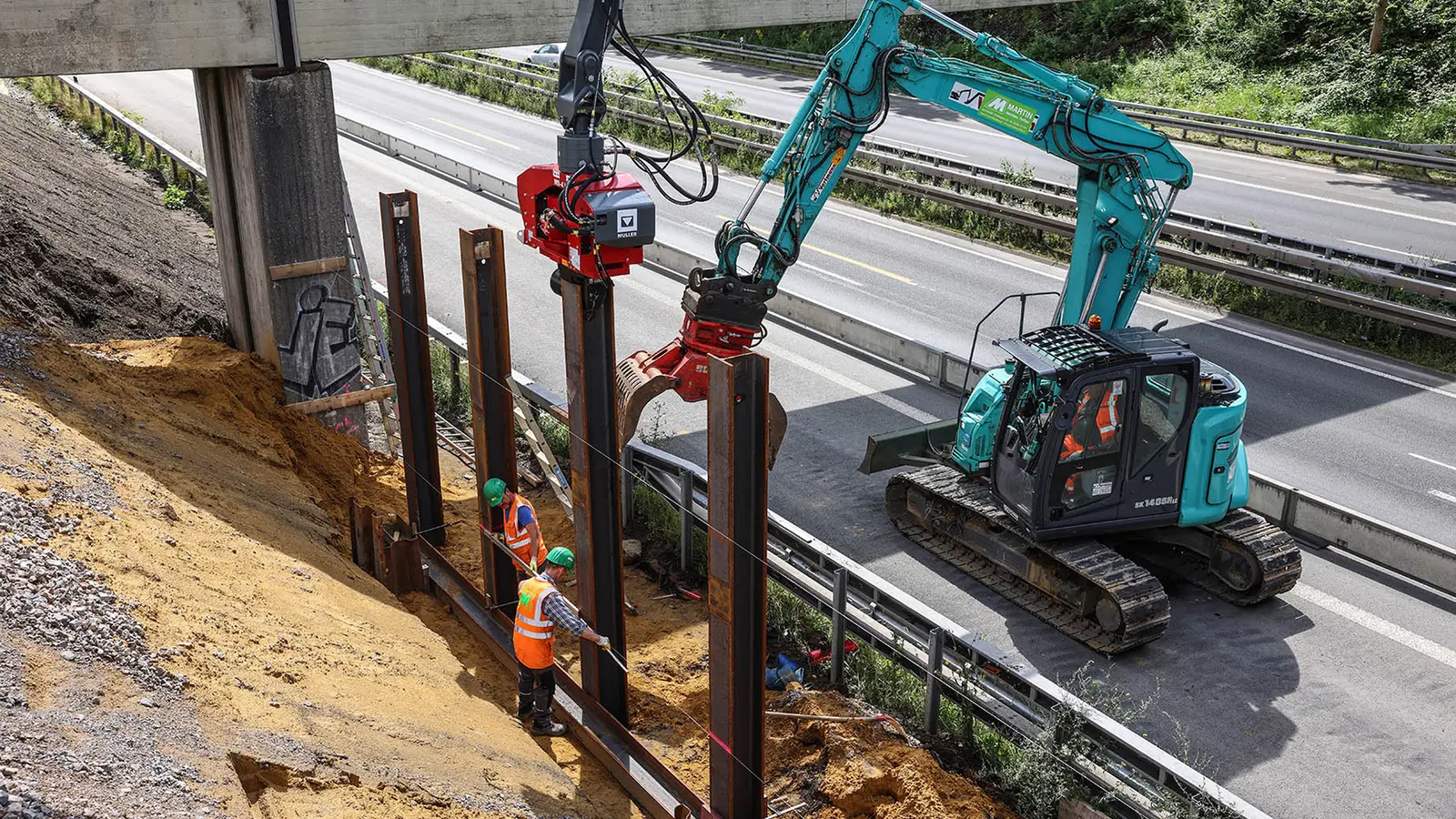
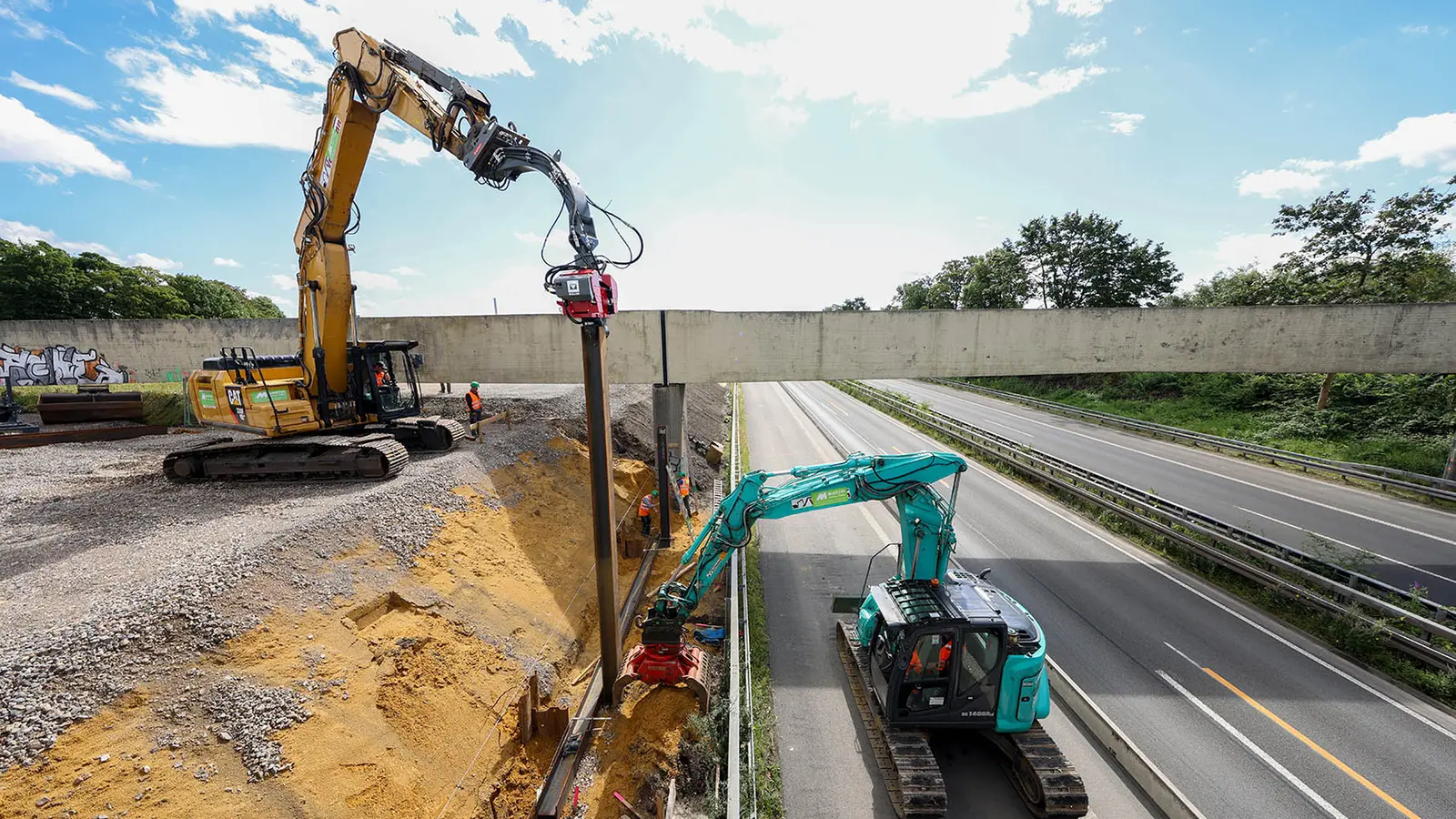
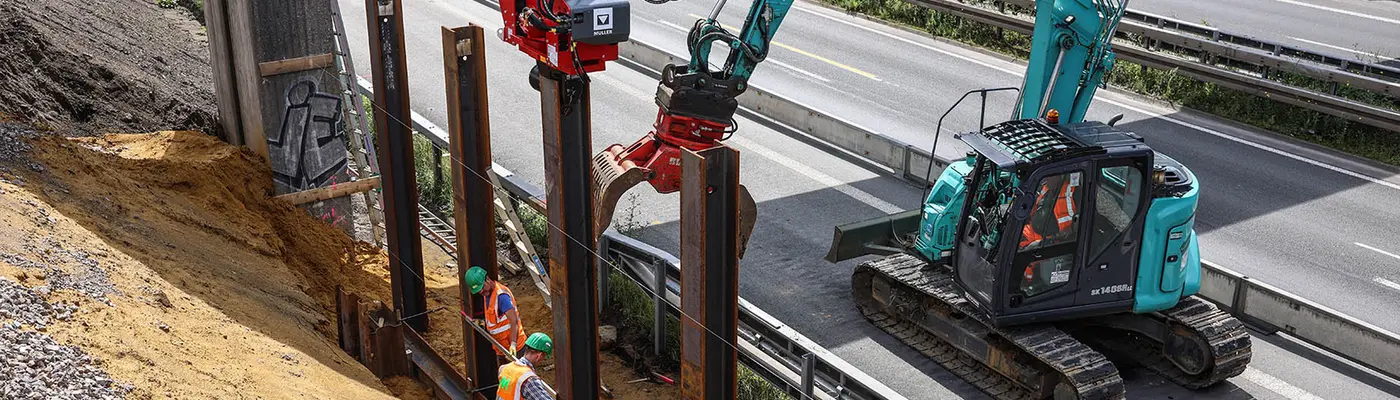
The location of the construction site, which was characterized by its close proximity to road and rail traffic as well as work on the Emscher dyke, had a particularly significant impact on the project. “Due to the increased span, the new bridge required only three instead of five foundations, which necessitated special construction measures,” explains Knipping. Innovative temporary structures had to be created, particularly for the central and northern foundations, in order to cope with the limited space available. In the project manager's opinion, the use of terra infrastructure technology proved to be effective here. Among other things, the task was to erect a sheet pile wall with steel infill and back anchoring for the central foundation of the new pipe bridge – a sensitive measure due to the Emscher dyke, which was subject to inspection by the Emscher-LippeGenossenschaft. In addition, the two 1,000-ton mobile cranes required additional safety measures by means of Sheet piles, which were driven using standard construction equipment. Thanks to customized solutions from terra infrastructure, this was possible with a 25–30-ton excavator.
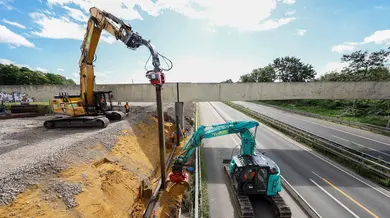
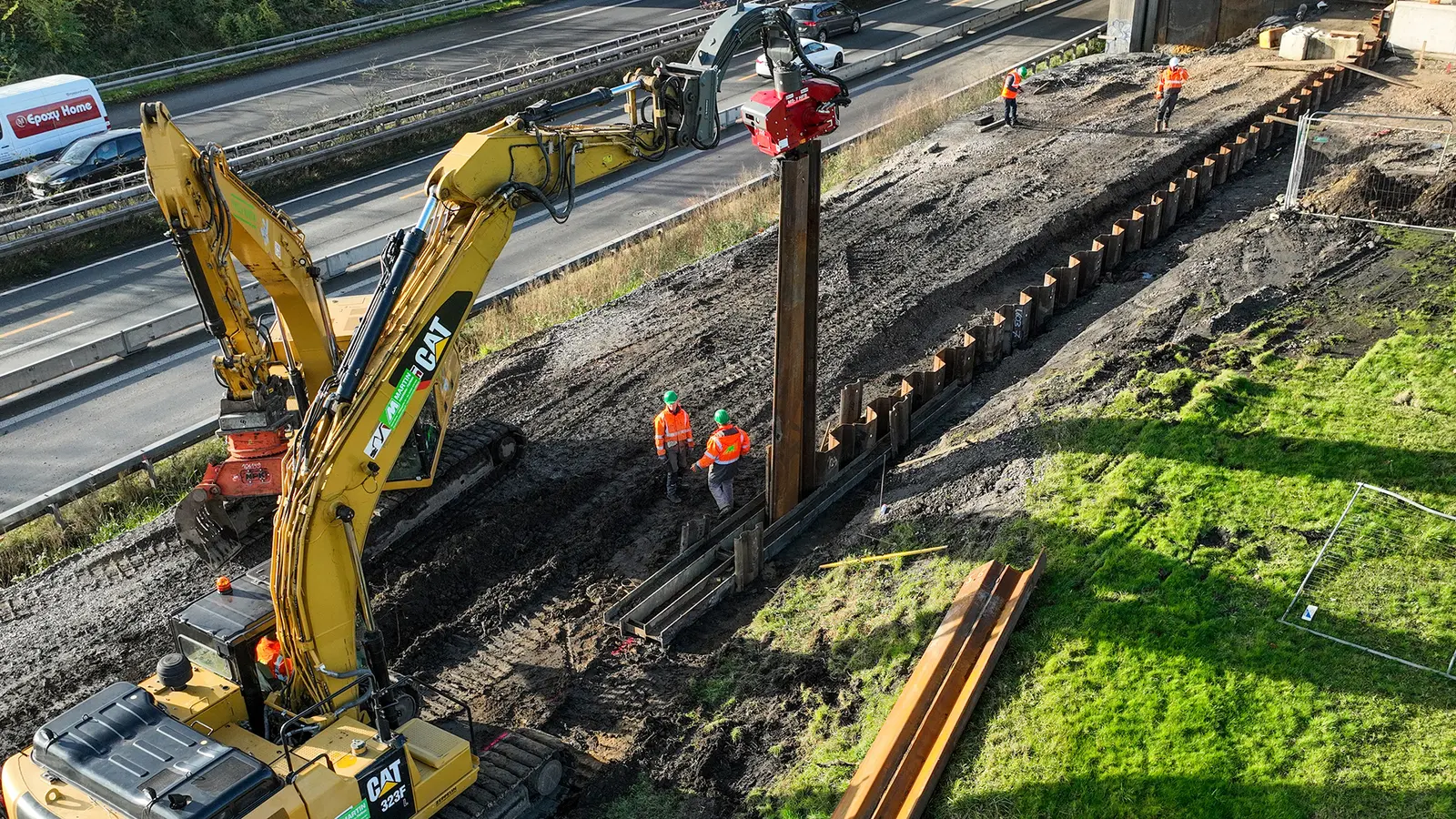
To prepare the subsoil between the A42 and the Emscher for heavy goods traffic, four boreholes were drilled to a depth of 20 meters using a bored pile rig. An additional challenge was that the dilapidated A42 bridge was placed under a barrier for vehicles weighing more than 3.5 tons. A special area for heavy goods vehicles was therefore set up in the immediate vicinity to serve as a loading and unloading area. At the site where the required crane site was created parallel to the A42, 60 meters of sheet piles, each seven meters long, were driven to secure the embankment. “This sheet pile profile has an optimized weight and high bearing capacity,” says Andrej Schwarz, Head of the Technical Office for Steel Section Technology at terra infrastructure. “It offers improved plank geometry for greater output during execution and is particularly suitable for projects with high requirements in terms of ramming and economicness.”
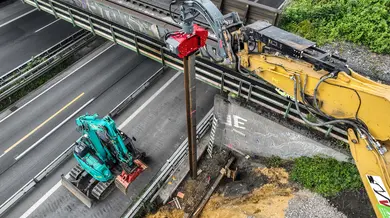
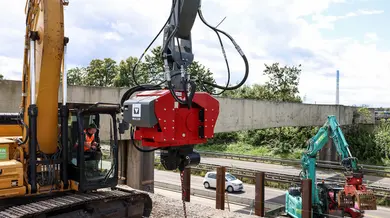
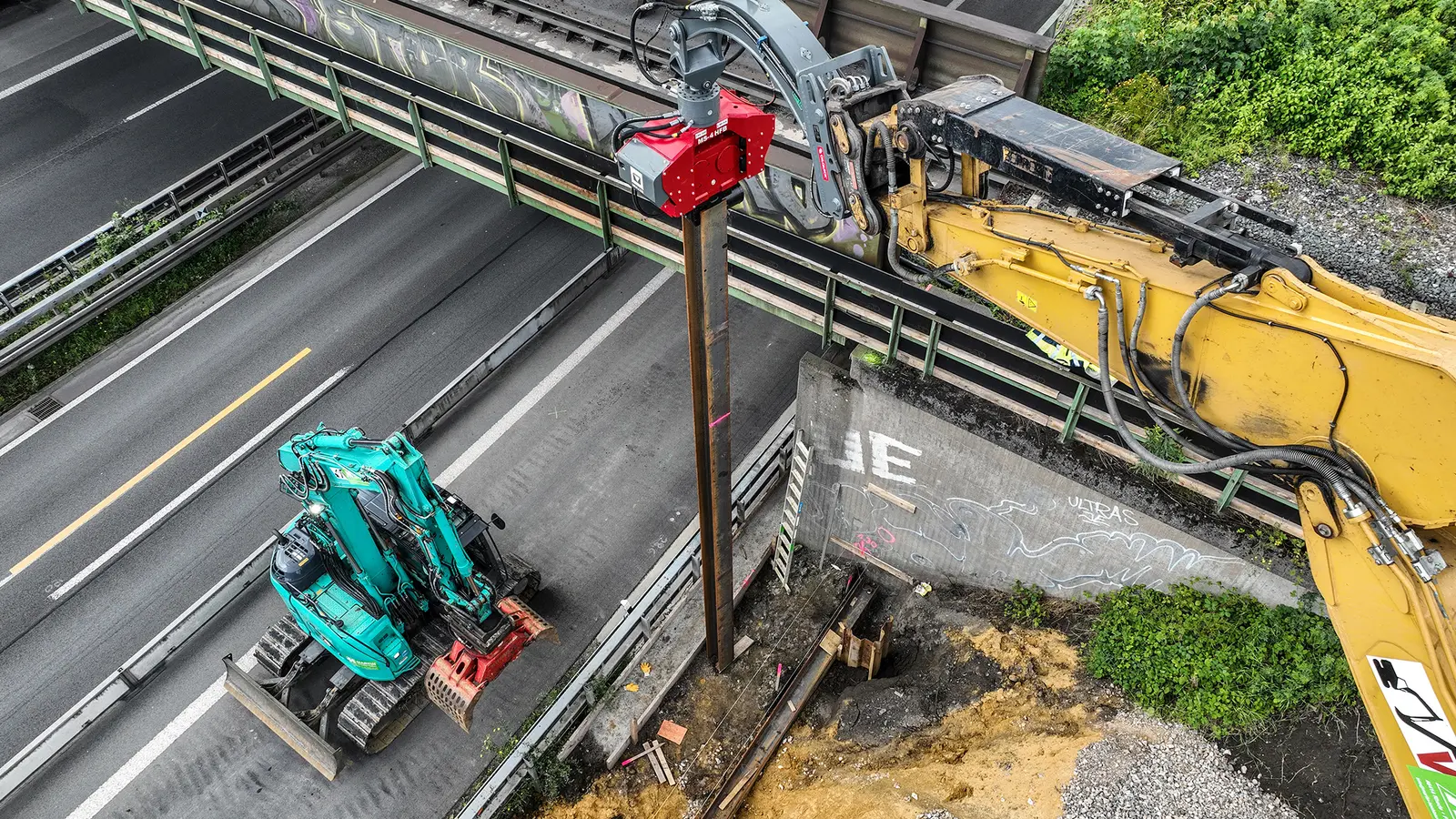
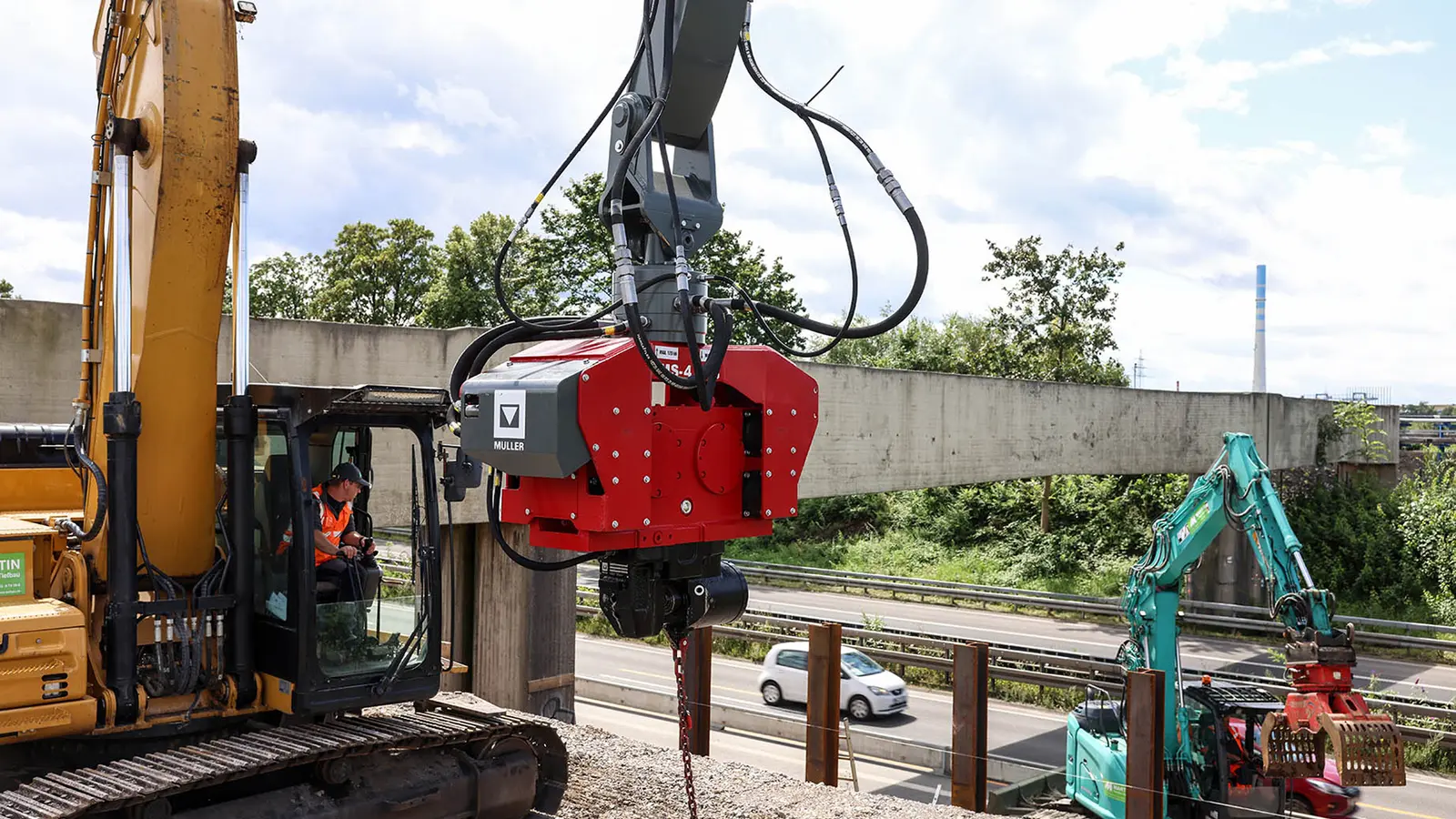
Klaus Martin Hochbau-Civil Engineering GmbH used a crawler crane with an operating weight of 26 tons for the driving. It was equipped with the MS-7 HFB vibration hammer from terra infrastructure's own brand MÜLLER. “The HFB series underwent a facelift in 2022, with various modifications specifically tailored to customer requirements,” Schwarz continues. Features such as a self-sufficient operating hours counter, leakage oil pressure protection, a transmission oil cooler, a 360° rotator, and a modified quick release ensure worry-free plug & play for the customer, as does the option of free hanging vibrator operation. “The MS-7 HFB is characterized by a high centrifugal force of 604 kilonewtons (kN), an eccentric moment of seven kilogram-meters (kgm), and a tension force of 150 kN,” says Schwarz, providing the description of the device's performance parameters. “With a rotator, the hammer can be flexibly aligned to position the sheet piles precisely. A pile driver gallows serves as an extension and improves the insertability of the piles.”
To prepare the construction site area for large diameter bored piles and to construct a pipe bridge foundation, the contractor used a 25-meter-length sheet pile wall with steel sheet infill and back anchoring. “The wall was secured with a back-anchorage (in this case, a dead man's switch) to absorb the earth pressure and increase stability,” Knipping continues. For this purpose, terra infrastructure supplied medium-weight HEB 300 wide flange beams with a construction length of nine meters. HEB 300 beams were also used for an 8.50-meter-long sheet pile wall with concrete infill, which was required to secure the ground under a pipe bridge foundation – this time with a construction length of 9.50 meters. These beams were driven using an MS-4 HFB vibratory hammer. The contractor used six-meter-long beams and the same equipment to construct a 45-meter-long beam pile wall for the manufacturing of a construction pit for another bridge foundation. It was executed as a classic Berlin-type shoring system.
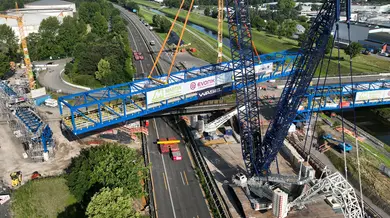
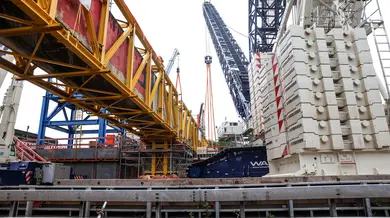
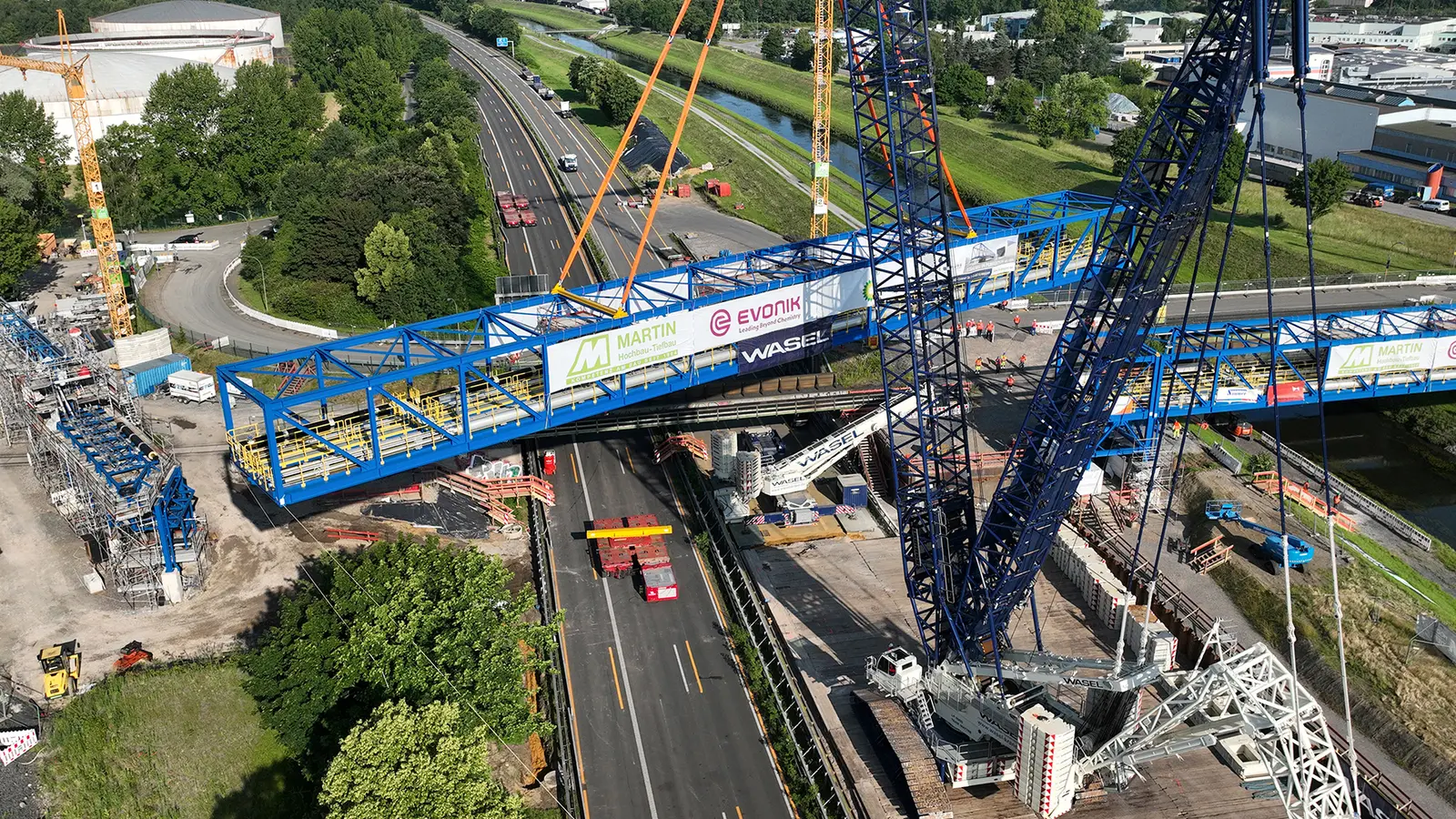
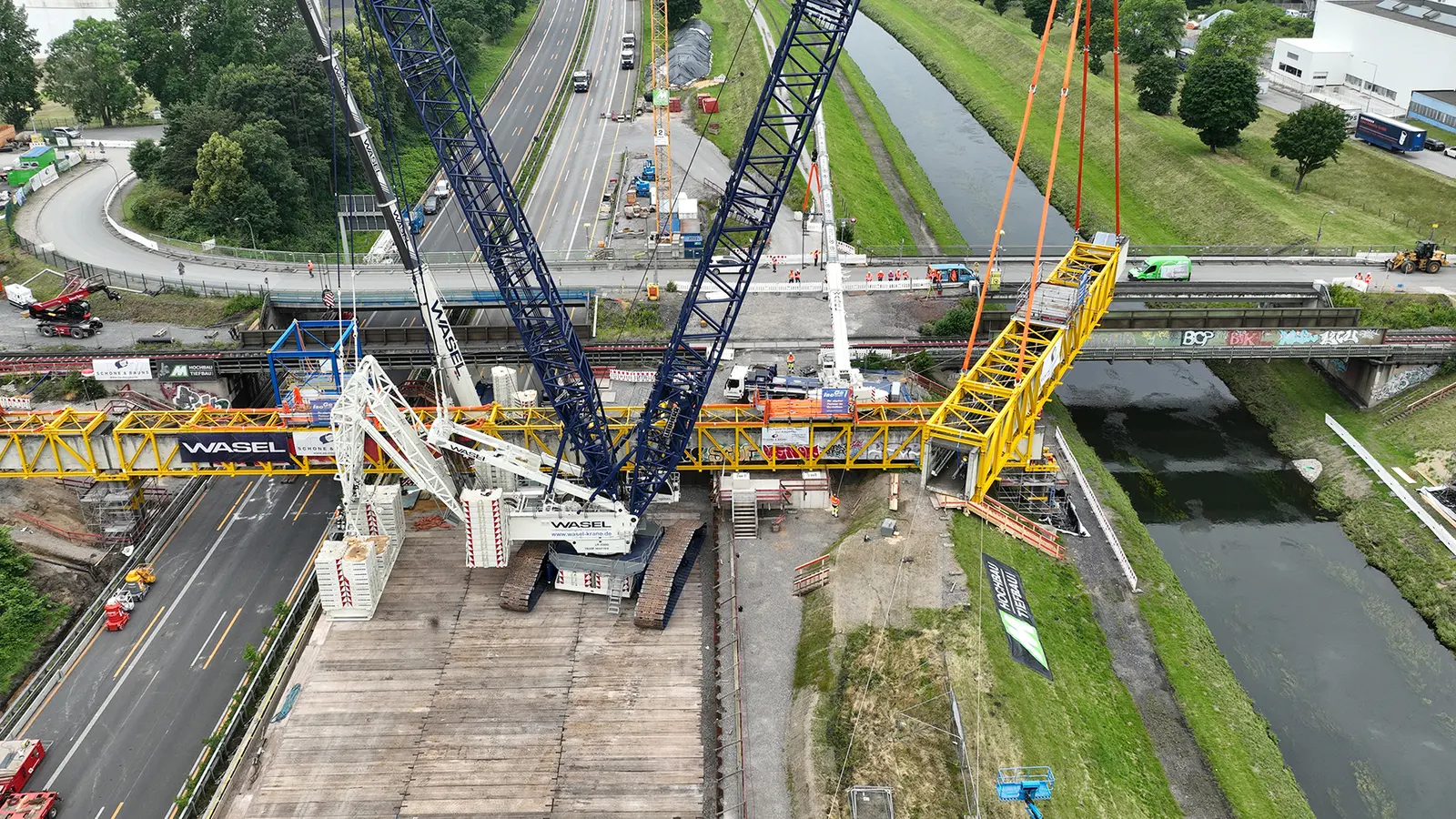
As part of the project, two crawler cranes were delivered in components and assembled on site. During the delivery, one remained at the port, while the other was transported to the pipe bridge over the highway and brought to Lichtenhorst. “The crawler crane, which weighed almost 1,000 tons, required the entire A42 motorway for its transport. Since the bridge would not have been able to withstand such a load, delivery was made exclusively via the port,” explains Knipping. The individual segments of the new pipe bridge were also delivered by ship, for which the harbor basin had to be deepened beforehand. In June, the segments of the new bridge were lifted into place as planned and carefully welded together at the ends. To ensure the stability and quality of the welds, a final inspection was carried out using X-ray technology. Around 200 people worked around the clock during the 72-hour closure scheduled for this purpose. According to project manager Knipping, one of the two lifting cranes had to be moved and the lanes of the A42 motorway had to be relocated during this phase.
Knipping attributes the fact that all the work on this unusual and highly complex project ran like clockwork to the excellent project management and commitment of all the construction partners involved, who together delivered an outstanding feat of engineering and Logistics. At the same time, he speaks positively about the technology, service, and performance of terra infrastructure. “The technical equipment, but also the ability to drive effective solutions to the collaboration at any time, were just as impressive as the ability to deliver material in any desired quantity to the site immediately.”